


All posts by 88herbs

Thermogenisis

What is thermogenisis?

The word “thermogenisis” is made up of the words “thermo” which means “heat” and “genesis” which means “to make” or “to produce”.
If a drug, a food, an herb, or any kind of supplement is “thermogenic” or has “thermogenic properties” it means that when a person eats it, their body temperature rises.
This term is very popular among body builders and people interested in weight loss supplements.
We all know that heat is a form of energy. So in order for your body temperature to rise, your body needs to first burn some extra calories in order to obtain the energy required to make that happen.
So a thermogenic substance will automatically raise your body temperature (hence burn extra calories), even while you are just sitting around the house and doing nothing. If you take them before a workout, you’ll burn even more calories than you otherwise would have. This is a dream for people who want to lose body fat.

What are some thermogenic herbs and supplements?

Some of the most popular thermogenic supplements are caffeine and ephedrine. You can find both in many weight loss supplements (although the rules and restrictions often change regarding how ephedrine is allowed to be marketed in both Canada and the USA).
When they are mixed or “stacked”, their combined effects are even more powerful. Even though thermogenic weight loss supplements can be very effective, it’s important to be careful when using certain ones.
Perhaps the most powerful one is 2,4-Dinitrophenol (DNP). This a dangerous thermogenic drug used for rapid fat loss.

Some more moderate, but effective, thermogenic supplements are:

• Green tea extract
• Ginger
• Cayenne pepper
• Cardamon
• Panax Ginseng (Korean Ginseng)
• White Willow (Nature’s aspirin) Note: Aspirin is not thermogenic on it’s own, but it is known to enhance thermogenic properties in ephedrine and other thermogenic agents.
• Green Coffee Bean extract
• Ephedra (ma huang) “herbal ephedrine”

These thermogenic herbs and substances can be taken by themselves, mixed together “stacked”, or taken with other weight loss supplements such as Garcinia Cambogia (LINK). Garcinia cambogia is not thermogenic, but it does significantly aid in weight loss and fat burning through different mechanisms.
Thermogenisis is just one of many mechanisms for weight loss supplements. Some supplements can help you lose weight by using totally different mechanisms. Appetite suppression (LINK), for example, is another totally different mechanism for weight loss. Some weight loss supplements work on enzymes and hormones in the body by either blocking the conversion of carbohydrates and proteins into fat, or by forcing the body to use it’s own fat as a source of fuel, rather than blood sugar or muscle fibres.

Are thermogenic weight loss supplements safe or dangerous?

There seem to be two extreme sides to this debate. One side just loves them and sees no need for any restrictions or any caution whatsoever. The other side acts as though they should never be used in any circumstance, even though they have no solid arguments or scientific evidence to back up their case. We opt for a more nuanced opinion somewhere in the middle. We believe people should be cautious when taking thermogenic supplements for weight loss, but there is absolutely a place for them. Certain foods, like green tea, chilli peppers, coconut oil, and lean proteins are all thermogenic. These foods are most often considered very healthy, so there is really no need for a ridiculously hard lined approach with thermogenisis. So it’s certainly not as though thermogenic supplements are bad in and of themselves, it’s just important to be careful, as is true with anything.
Many people will combine or “stack” different supplements with thermogenic properties. This dramatically increases their effectiveness, but it also can increase the health risks involved if people aren’t careful. Caution is advised. And as you can imagine, many people really go overboard when trying to lose weight quickly, so it’s not uncommon for them to far exceed the recommended doses. Too much caffeine and ephedrine taken together can cause rapid heart rates and increase the risk for heart attack and stroke.
DNP is very dangerous because it results in a “dose dependent” increase in body temperature. And in large enough amounts, it does so to the point where it can induce death by hyperthermia. (Hyperthermia is when the body’s temperature is so high it overwhelmes our internal cooling systems). Heat stroke and heat exhaustion is another common and also potentially deadly form of hyperthermia.
“Dose dependent” means that the higher the dose, the higher the effect. Our bodies can’t counteract the effects of the higher doses.
Eating sugar, for example, does not increase your blood sugar levels in a dose dependent way. It’s not true that if you keep eating more sugar at one time, your blood sugar levels will keep going up with it. In a healthy person, insulin kicks in and takes down the blood sugar levels. (I’m NOT advising eating sugar all the time! I’m just trying to explain “dose dependent”)

Are thermogenic supplements effective for weight loss?

Yes. That is the short answer. But most people want fat loss more than just weight loss. Thermogenic supplements raise body temperature and force the body to burn more calories, but that doesn’t mean the calories are all coming from your love handles or other “problem areas”. If you don’t have your metabolism operating at peak performance, which most people don’t, you could wind up burning your muscle fibres rather than body fat.
Thermogenic foods and certain supplements are good for speeding up your metabolism in general, but if you use them, you also need to keep your body in a metabolic state where you burn fat rather than muscle. A high protein, high omega 3 fat, and low carb diet works well with thermogenic supplements.
A horrible idea would be to use thermogenics and eat candy, bread, or sugary stuff regularly. Those high carb foods spike your blood sugar, and force your body to store those carbs are body fat.

What are some alternatives to thermogenic weight loss supplements?

Appetite suppressants, like 5 HTP and Garcinia Cambogia are a good alternative. So are supplements which block hormones, like insulin, responsible for converting sugar into fat.

Are there any “non jittery” thermogenic weight loss supplements?

The “jittery” or nervous feeling you get from many thermogenic supplements is from the caffeine content, and not really the thermogenic aspects per se. You won’t get jittery from eating cayenne pepper. You won’t get jittery on a high protein/low carb diet. Just look for supplements with no caffeine if you want to avoid the uncomfortable jittery feeling. Everyone is different too. Some people love the caffeine content and the effect it has on them personally. Others hate it. See for yourself what feels good for you.

Supplements for approach anxiety

Supplements for approach anxiety

There has been a lot written in the PUA community and in forums about approach anxiety, and what types of natural supplements or pills work the best to relieve it.
This article will attempt to provide a much deeper biochemical understanding of approach anxiety and give men some solid advice for dealing with it by using a combination of natural herbal supplements.
The anxiety men experience when it comes to meeting women is completely natural, and it’s biological. It’s extremely frustrating, but it’s totally normal.

On a physiological level, it’s not really any different than “social anxiety”. It’s just a very specific type of social anxiety with a mild phobia (fear) attached to it.
The best way to cure this is to understand what is going wrong in the brain, and then use modern science to combat these effects.
Many people in the pick up community have recommended “L-theanine” on it’s own for the best natural way of reducing approach anxiety.
Here is a far better more potent combination supplement for approach anxiety
I’m not sure why L-theanine gained so much popularity for this specific condition, but the fact is that there are much better alternatives.

L-theanine is the substance in green and black tea which provides a calming effect. It acts as a mild anxioltic (anti anxiety) and a very mild muscle relaxer. It’s perfectly reasonable to try it to relieve any nervousness when meeting women, and it’s a great supplement, but it’s likely not strong enough on it’s own to really make a difference.
Since the anxiety men experience when meeting new and attractive women for the first time is so strong and powerful, it’s necessary to combat these fears and obsessive thoughts with a strong and relaxing cocktail of herbal remedies which work together.

For men to feel calm and stand a better chance of succeeding with women, they will need to experience the following feelings:

1. Increased confidence and self belief
2. Significantly reduced feelings of anxiety
3. Increased happiness and sense of optimism
4. Reduced feelings of second guessing and self doubt
5. A sense of inner peace and calmness

To achieve these affects simultaneously, it’s best to take the correct combination of potent herbal extracts which are designed to deliver these results.
L-theanine will help increase self confidence, but only marginally on it’s own. It will work much better if it’s combined with 5 HTP. 5 HTP is often prescribed as an all natural anti depressant. Even if you aren’t depressed in general, the 5 HTP should make you feel “happier”, “more confident”, and in a better mood. Women will quickly notice and appreciate your better mood and sense of self belief too.

Another benefit of using 5 HTP is that it works very quickly.
Ashwagandha (Indian Ginseng) can work very well too. It’s an “adaptagen” meaning that it regulates all kinds of processes in the body. It reduces stress and anxiety and increases confidence. You can take it in large doses and it’s very non toxic. It should definitely be mixed in with other supplements because it’s effects are much stronger in a blend, and the effects take a longer time to work. Sometimes people need to take ashwagandha for several days or weeks straight to experience the full effects. If you have approach anxiety in general, you can consider taking ashwagandha daily. It’s fantastic for other parts of your health as well.

The combination of valerian root extract and passionflower is a great combo too. This is because valerian increases the neurotransmitter GABA in the brain, and passionflower stops the enzyme that breaks down and destroys GABA. That is a simple explanation but essentionally that is how it works.

High levels of GABA in the brain mean low anxiety, low worry, low racing thoughts. It is an inhibitory neurotransmitter (alcohol is inhibitory as well) so it drastically slows down the crazy and useless thoughts and makes you “more normal” in these stressful and nervous situations. These are well known to be like a “natures valium”, even on their own. But the combo of passionflower extract and valerian is incredibly powerful for reducing anxiety.
If you often experience nervousness or approach anxiety when meeting women, you really should try ZenX. It’s made from incredibly potent herbal extracts to relieve general anxiety, depression, social anxiety, and lift confidence and mood. It’s probably the best and most powerful supplement or pill on the market for curing approach anxiety.

Best supplement for Anxiety

What is the best supplement for Anxiety?

We’ve been on a multi-year intense research quest to find the absolute best and most potent natural supplement combination for all forms of anxiety; whether it be General Anxiety Disorder, Social Anxiety, or really any type of anxiety which can haunt an otherwise healthy person, and eat away at the quality of their lives.
We’ve found that the correct answer lies in a truly complex combination of several natural substances and cofactors. If you’ve tried one or two herbs for anxiety and found they didn’t work, or at least not really as well as you’d like, then this should come as no surprise.

The great news is that when combined in the right way, the synergistic combination of the studied herbs and cofactors can significantly reduce anxiety and dramatically improve overall mood and a sense of well being and happiness.
We’re proud to present the most up to date, exhaustive, and accurate information to you here.
We’ll explain how anxiety works at a biochemical level in the brain. And then we’ll show you what to combine, and in what ratios, to treat this naturally. We’ll also explain how this all works together. The most potent herbs, supplements, and cofactors for reducing anxiety which we’ll discuss in this report are:

• L-Theanine
• Valerian
• Passionflower
• 5-HTP
• Ashwagandha
• Vitamin B6
• Vitamin B3 (Niacinimide)
• Vitamin B12 (Methyl)
• Magnesium citrate

In order to answer this question properly, we needed to first research what the biochemical mechanisms of anxiety are, how it works in the brain, and then find what herbs, amino acids, neurotransmitters, and other natural substances we can combine to synergistically combat these effects simultaneously.
Anxiety works in several fascinating ways and on many different systems. It’s more than just “nervousness” or “excessive worry”.

It’s important to truly understand that it’s biochemical in nature. When we’re our most anxious, many things are physically happening in different parts of our brains. We need to understand what is going on, and fight fire with fire to get back to our natural state of peace.

One aspect of anxiety is simply over activity in the brain. We all know what it’s like to drink too much coffee (caffeine). We feel jittery and nervous. Even if we have nothing to be nervous or anxious about, we know the feeling of too much caffeine in our systems. It’s an uncomfortable feeling.

Well, even without the caffeine, our brains are still often over-active. Caffeine is a stimulant. We need something that is like an “anti caffeine” to combat anxiety. Something that relaxes your mind and calms you down.
A sedative, is somewhat like the “opposite” of a stimulant. It is relaxing, it’s calming. A sedative, in relatively small doses, can help relieve all types of anxiety. (Large doses of sedatives will put you to sleep, and extremely large doses can actually have the opposite effect and make you nervous)

Have you ever noticed that drinking tea will make you much less anxious than drinking coffee? It’s not because there is less caffeine in tea (which is true) but it’s because tea, both green tea and black tea, contain a substance called L-Theanine.

L-Theanine combats the stimulative effects of caffeine and provides a feeling of calmness. It also helps to improve mood and optimism. It is not really a sedative, but has some sedative like properties. It is more of an anxiolytic (see below), but it does have some properties of each. Since it’s not a strict sedative, it can reduce anxiety without causing much drowsiness.

It works by inducing the release of gamma-amino butyric acid (GABA), the primary inhibitory neurotransmitter. When brain levels of GABA are high, people are more relaxed and less anxious. And although direct supplementation with GABA is possible, many believe that supplementation with L-Theanine is far better because GABA can’t get into the brain from the outside (ie, can’t cross the brain blood barrier) when taken as a supplement. GABA is only beneficial when it’s already in the brain to start with, and L-Theanine can assist in the release of GABA in the brain.
L-Theanine can be extracted from tea leaves and taken alone as an anti anxiety supplement. You’ll often see L-Theanine supplements marketed as stress reducers or something along those lines. It’s a wonderful supplement, but it’s far more effective when taken in combination with others mentioned below.
Valerian is another extremely popular and effective weapon in the treatment of anxiety. In order for supplementation with valerian to be effective, it needs to contain high amounts of the active ingredient, valeric acid. Most of the valeric acid is found in the root of the valerian plant. So it’s essential to have an extract of the root, and it’s even more essential to ensure that the extract has been standardized to a degree of at least 0.8% valeric acid. Regular crushed up valerian plant won’t do much if anything at all. You need the valeric acid.
Valerian is also used as a potent sleep aid, and it is a strong sedative. If you are using valerian in the treatment of social or general anxiety, you need to have a relatively small dose so you get the calming effects without being knocked out. Valerian root extract has been scientifically shown to reduce anxiety, but the exact mechanims of work are not completely known or agreed upon by scientists. They do, however, agree that it does work.
They believe that it, like L-theanine, acts on the GABA neurotransmitter. But it works on a different way than L-theanine does. The combination effect of low does valerian with L-theanine is very good for relieving anxiety without causing extreme drowsiness.

Passionflower extract (standardized to guarantee at least 4% flavanoids) is another saviour in the war against anxiety. If you can find a passionflower with 20% flavanoids, then all the better. That is 5X as powerful! It’s extremely rare on the market, but it does exist. Passionflower has been used on it’s own and with valerian. The combination or “multiplier effect” of the passionflower/valerian mix is nothing short of impressive. They both work on the GABA receptor in different ways. High levels of GABA in the brain induce feelings of happiness, optimism, calmness, and a sense of well being. While valerian and L-theanine increase the levels of GABA in the brain, passionflower seems to keep the levels high.

It acts as a mild “MAO inhibitor”. MAO stands for “mono amine oxidase”, which sounds like a fancy word. But it’s really just a natural enzyme which breaks down GABA. So imagine that you have high levels of relaxing GABA in the brain from L-Theanine and valerian. Now adding passionflower into the mix will ensure that the levels stay high. This is intentionally oversimplified, but it’s essentially what is going on. Some studies question passionflower as a true MAO inhibitor, but it’s well known that it works very well in conjunction with valerian. Even when taken alone, some studies have shown passionflower to have similar effects of “Valium” in rats. The effects are much more pronounced and effective when taken with these other 2 supplements. Many people feel that passionflower gives them a sense of extreme happiness and even euphoria.

Ok, now onto serotonin, the “happiness hormone”. Anxiety and depression are clearly not the same thing, but they are indeed linked. If you are nervous about a speech or a presentation, you are experiencing anxiety. If you are just sad and down, you are experiencing depression. People who are sad and down in the dumps a lot usually have much higher levels of anxiety, both general and social. They are more introverted, and they are afraid and uninterested in meeting new people. They have a hard time really feeling confident and being themselves. It’s a horrible feeling and we’ve all had it, it’s just far worse for some of us than others.

The purpose of looking at depression (the opposite of happiness and positivity) in the discussion of anxiety is that if we can induce happier and more positive and optimistic moods in people who experience anxiety, we can simultaneously make them feel better and reduce their anxiety levels. So increasing serotonin can be indirectly key to dealing with anxiety. The added confidence and happiness from higher levels of serotonin help tremendously get rid of the needless thoughts of worry and over-thinking that come with anxiety.
5-HTP (5 Hydroxy Tryptophan) is a natural chemical precurser for tryptophan, melatonin, and serotonin. It is often sold and prescribed on it’s own to help with depression. The basic mechanism is that it increases serotonin levels in the brain, which provide us with “feel good”, “happy”, and “optimistic thoughts”. Several studies have shown that 5-HTP works wonders on relieving depression, and in conjunction with the other herbs and cofactors we’re discussing, on combating anxiety as well.

B Vitamins – An Important Overview

This article (and the rest in this series) are meant to provide a solid foundation in your understanding of the B vitamins. For such an important class of vitamins, there is far too much ignorance surrounding the topic. These will help answer a lot of important questions and clear up a lot of misunderstandings. Feel free to share these on social media and re-post them on forums. They will help a lot of people make more informed choices with vitamin supplementation, specifically the B vitamins.

What are B Vitamins and why are they named this way?

Before delving into what exactly B vitamins are, let’s back up a bit and provide a larger framework and some relevant historical context.

Vitamins in general are defined as:

“Any of a group of organic compounds that are essential for normal growth and nutrition and are required in small quantities in the diet because they cannot be synthesized by the body.”

As you can see, this is a pretty general definition, and it leaves a lot of room for interpretation. It could be argued that a lot of substances could be classified as a “vitamin” according to this definition. It is anything but cut and dry.
The seemingly organised naming system of Vitamin A, Vitamin B, Vitamin C… and the subgroups (B1, B2, B3…) make all vitamins appear to be well named and organised clearly into some special class of compounds. But they are not. The naming is surprisingly arbitrary for all vitamins.
The names of each vitamin is based more on history of discovery rather than on some logical naming system. Scientists in the past named a certain set of organic compounds “Vitamin A”, and then a different set “Vitamin B”, a different one “Vitamin C” etc. The system is very arbitrary.
So the “B vitamins” simply refer to a particular group of compounds which play an important role in cell metabolism.
You may wonder if there is any specific reason that the vitamin A compounds are called “A” and the vitamin B compounds are called “B”. The answer is no. It could have been the other way around.

You may also wonder, why do we have vitamin A, B, C, D, E, and K, but you never hear about vitamin F. What is going on there? It seems only logical to use every letter right?

Well, in fact they did try to use every letter. Originally, vitamin F was reserved for Omega 3 and Omega 6 fatty acids. But the names “Omega 3” and “Omega 6” became the popular names rather than “vitamin F”.
This was because scientists later discovered that these omega 3 and 6 fatty acids were not really “vitamins” according to their loose definition, so they just dropped the idea of calling them “vitamin F”. So the name “Vitamin F” will always be vacant.
This is similar to the other missing letters. “Vitamin G”, originally riboflaven, for example, was re-named “Vitamin B2” because scientists figured it’s function was more in line with the other B vitamins.

There are in fact many different B vitamins. You will hear about vitamin B1, B2, B6, B12…

So what are these B vitamins and why do they have different numbers?

What ties the B vitamins together is their basic function on the human body. The B vitamins are water soluble, and they each play a basic role in cell metabolism. They each help facilitate many important and complex processes in the body, but more detail on that below…
Each different B vitamin is a totally separate substance however. Eg. B3 and B12 are totally different from each other. They are not at all the same substance. They just play somewhat similar roles in the body.
Vitamin B1 is a substance called Thiamine for example. Vitamin B2 (formarly known as vitamin G) is a substance called Riboflaven. Thiamine and riboflaven are 2 totally different substances and just arbitrarily named B1 and B2.
So in many ways, it would have made more sense to study Thiamine on it’s own and Riboflaven on it’s own without giving them special extra names.
When you name both of these substances “B vitamins” with a different number associated, it makes people assume they are more connected to each other than they really are in actuality.

And just like the “missing vitamins” like “F”, “G”, “H”, …, you’ll also likely notice that you won’t see many of the B numbers. You’ll hear about B1, B2, B3, and B5. But you won’t hear about vitamin B4 for example.
That is because vitamin B4 was originally reserved for the substance “adenine”, but adenine was later found out to be synthesized in the body. And substances which are made in the body are not vitamins by definition. So the name “B4” was dropped. We now just call “adenine”, well, “adenine”.
There are similar reasons for all the other “missing B’s”. Each number was originally designated to specific compounds, but later found to be inappropriate for various reasons to hold the title as a “B vitamin”. That is why you won’t see “vitamin B8” for example, but you will see “vitamin B9”.

Now that we’ve adressed this messy, albeit interesting, vitamin naming system. Let’s go ahead and discover what the different B vitamins are, what they do, and why we need them.

5-htp

5-htp supplement

5-HTP Overview – What is it and how does it work?

5-HTP, or 5 Hydroxytryptophan, sounds like it might be some synthetic chemical by name alone. It’s actually a naturally occurring amino acid, most often produced from the seeds of the African plant, Griffonia simplicifolia. Very few known foods have any, so don’t expect to get any from your diet.
It is a precursor to serotonin. This means that 5-HTP helps the body naturally produce serotonin and raise a person’s natural levels of serotonin. It also helps produce melatonin from Tryptophan, but more on that below.
Serotonin is widely known as the “happiness hormone” and most pharmaceutical anti-depressants work on one of 3 main mechanisms.
1. By increasing the amount of serotonin directly.
2. By blocking the enzyme which destroys serotonin (MAO inhibitors), thus allowing more serotonin to remain in the blood for longer.
3. By blocking the synapses from re-absorbing the serotonin in the blood, thus increasing serotonin levels (SSRI’s).
Simply put, 5-HTP helps to increase blood levels of serotonin, and high serotonin levels are responsible for many things like improving mood, decreasing appetite, improving sleep quality, reducing anxiety, and increasing a person’s confidence and self-esteem.
To get an idea of how powerful serotonin can be on a person’s mood, the drug ecstasy (MDMA) acts by dramatically elevating serotonin levels to the point of absolute euphoria. Many people swear by using 5-HTP to help with the MDMA “comedown”, which is the depressing experience of very low levels of serotonin following a dramatic spike.
Unlike Ecstasy, however, 5-HTP can be taken regularly to raise a person’s natural or “baseline” levels of serotonin, thus making them happier, less hungry, less anxious, and have increased confidence. It is available in Canada, the US, and the UK as an over the counter supplement. It’s not allowed over the counter in several countries yet. This can sometimes give an idea that it’s quite powerful and effective.

Does 5-HTP work?

The short answer is YES. 5-HTP works, and it works very well. It’s essential you get a very pure form of it, so don’t be fooled and do your research, but it does indeed work, and it’s been backed up heavily by scientific studies. Here is a decent overview on 5-HTP done by NYU medical centre. Another good thing about 5-HTP is the fact that you don’t need too much of it to get a therapeutic effect. 50mg is often enough for a powerful dose. In contrast, many herbs require several grams of the dried plant to be ingested before any positive effects are experienced. That makes it almost impossible to sell as an effective supplement because people don’t want to take 25 capsules of something per dose. With 5-HTP, you get a lot of “bang for your buck”. It can be combined with other herbs to really enhance it’s effects as well.
5-HTP is very often sold as a single ingredient supplement. This is fine, but it’s often a lot more effective when it’s used in combination with other herbs. This produces a “multiplier effect” where the combination of the herbs work far better than one might guess.
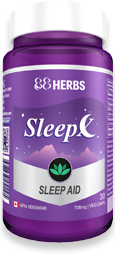
For example, we’ve made a very powerful herbal anxiety supplement and a very potent herbal sleep supplement by combining an extremely pure form of 5-HTP with several other co-factors and potent and standardized herbal extracts. We also have a single ingredient natural 5-HTP product with our our Pure™5HTP. The amount of 5-HTP in these supplements alone would work well, but when combined in these formulas, the results are amazing.
For example, in our daytime anti-anxiety mood enhancing supplement, we combine 5-HTP with passionflower (which also helps increase serotonin through a slightly different mechanism), thereby increasing happiness and confidence.
We also add in ashwagandha and Valerian root. Ashwagandha decreases the stress hormone “cortisol”, whereas Valerian root acts like “nature’s Valium” and calms people down with sedative and anxiolytic properties.
There is enough of each ingredient to work alone because we used only the strongest and most potent extracts, but when combined, the effects really show up and work incredibly well. Learn more about Zen-X and Sleep-X

5-HTP dosage

The recommended dosage of 5-HTP is all over the board if you try to learn about this on your own. This is extremely important so please take the time to read this paragraph so you can make your own intelligent and informed decision.
Before I give a “recommended dose” I need to clear up a few things and explain why it’s not a “one size fits all answer”. First of all, everyone’s body is different and they metabolize 5-HTP differently. Some people experience major effects with very small doses, like 25mg, whereas other people claim that massive doses like a gram (1000mg) do nothing. Both of these extremes are rare, but they do exist.
It’s also important to know if a person is taking anything that would work synergistically with 5-HTP to increase serotonin or keep it in the blood longer (both have the same effect on the body). People who take MAO inhibitors or SSRI’s would need far less 5-HTP to experience the same increase in serotonin.
Reading a disclaimer which is far overused is something like, “don’t take 5-HTP if you are taking any MAO inhibitors” for example. The challenge with this type of claim is it is a little careless in the sense that it pays zero attention to the amounts of either. Taking 1 mg of each would do basically nothing, so that statement on it’s own really needs to be understood properly to have meaning.
It is, however, important to pay close attention to what else you are taking which affect serotonin levels and adjust your dosage accordingly (and do so with the help of a trusted healthcare practitioner).
Assuming you are taking no other supplements at all which affect serotonin, the recommended daily dose can range from 50mg per day to 600mg per day (spaced out in several doses), or sometimes even more.
Most often, the recommended dosage is between 50-300 mg’s daily.
The reason recommended doses almost always come out in nice round numbers like 100 or 300, is that this is the amount which scientific studies use. If a study tests the effects of 300 mg of something vs. nothing, and the results show that 300 mg’s made an improvement, then people will start recommending 300. It’s unfortunately not true that there are studies on every amount. People need to be careful here, speak with their doctor, and make decisions based on how they are reacting personally.
We recommend starting with 50 mg’s and working your way up, with 50 mg jumps each time. It’s a safer way to experiment than just jumping right into higher levels the first time you take it.
As mentioned above, we also combine 5-HTP in synergistic blends in our Anxiety Zen-X and Sleep-x formulas, so we are careful not to go overboard with incredibly high doses.
And a 50 to 100 mg dose is quite powerful, especially because we combine it with the best quality B6 and B12 vitamins on the market, making it absorb much better. We combine this with an extremely wonderful and potent passionflower extract as well, which has been shown to increase serotonin levels by acting somewhat similarly to a mild MAO inhibitor, although the jury is still out on the exact mechanisms of passionflower. What is true, however, is that they both work very well for millions of people, even when taken in isolation.

5-HTP for weight loss and appetite suppression

5-HTP aids in weight loss in part by decreasing a person’s appetite (an appetite suppressant). Higher levels of serotonin make people feel more satiated, and therefore less hungry.
Sugar cravings are a big one, and 5-HTP works by reducing those. There are many reasons a person may feel hungry, even to the point of pigging out for “no reason”. Well, a huge part of that “no reason” comes back to serotonin levels. Sugary carbohydrates help to increase serotonin as well, and that is one major why eating junk food is so appealing in the short term. It’s not the taste, it’s the dopamine and serotonin spikes we’re really after. 5-HTP can give you the serotonin increase you desire and all the mood and other benefits which go along with that, without giving you the empty calories and all the horrible things that go along with over-eating. Once your serotonin levels are high from the 5-HTP, you will be far less hungry and have far less cravings for food, because you won’t be requiring the serotonin spike from the outside. 5-HTP as an appetite suppressant and weight loss supplement have been studied and the effects have proven to be great.

5-HTP for depression and anxiety

People want to feel calm, happy, energized, confident, worry free, and optimistic rather than depressed and negative. High levels of serotonin alone can achieve a lot of these results, and 5-HTP works accordingly as a supplement to achieve all this. As we’ve mentioned in other posts, depression and anxiety are not the same thing, but they are both psychological problems which feed off each other.
Raise your serotonin levels naturally, and you will feel better, happier, and more optimistic. These feelings in turn help melt away your anxiety and needless worrying as a welcomed by-product.
5-HTP is directly more of an anti-depressant than an anti-anxiety (anxiolytic), but the anti-depression properties from higher serotonin, work wonderfully well in combination with anxiolytics (anti-anxiety) supplements.
If you are anxious or depressed, you will likely be interested in checking out our incredibly potent and effective daytime anxiety supplement Zen-x

5-HTP for sleep

5-HTP is often prescribed as a sleep supplement. It’s a by product of L-Tryptophan, a powerful amino acid which helps with sleep. It also increases natural levels of melatonin, the most powerful hormone produced in the pineal gland, which tells the body when it’s time to sleep. And 5-HTP can be taken in the day without causing drowsiness because the melatonin it helps produce will stay in the pineal gland until nightfall, when the body recognizes it’s night time.
In our potent sleep formula, we combine 5-HTP with a pure melatonin supplement, L-Tryptophan, and some anti anxiety herbs to help you relax and drift off to sleep, like very strong extracts of Valerian root and passionflower. The combo will help you fall asleep, stay asleep through the night, and wake up refreshed.
But you can buy 5-HTP on it’s own, and many people report that it works well for helping them fall asleep when taken on it’s own. This is a testament to how powerful 5-HTP is for not only sleep, but reducing anxiety, improving mood, helping with weight loss, and increasing a person’s confidence and self esteem. It’s even being prescribed as a supplement to reduce the frequency and severity of migraines. We’re currently researching this heavily right now and are looking into making a daily cocktail of powerful herbs to reduce migraines. There is really nothing good on the market for that at the moment, so please check back here soon for what is coming up for migraines.
So check out taking 5-HTP on it’s own in different doses and seeing what’s right for you, or look into taking it in combination supplements like the ones we make here. This is an amazing supplement and it is absolutely worth trying.

Do Anxiety Supplements Work?

Do Anxiety Supplements Work?

The short answer is, yes, absolutely they do. But there is a ton of misinformation out there on both sides of this debate, along with countless cheap and ineffective brands of supplements trying to make a quick buck.

First, I want to touch on a bit of background as to where the confusion is really coming from. There are literally billions of dollars at stake on both sides of this issue. Simply put, the pharmaceutical industry has a massive vested interest in keeping as many people as possible on their patented prescription medications. The notion of a natural herbal product eating into their sales would be a nightmare for them.

On the opposite side of the spectrum, supplements are a multi-billion dollar a year industry. Large supplement companies have a huge financial interest in telling people that their natural herbal product will dramatically help people’s anxiety, regardless of the truth. Since the typical consumer isn’t hugely educated in understanding natural supplements, most large supplement companies understand that from a strictly business perspective, they can make very cheap supplements, sell them at a high price, and market them as highly effective. From a manufacturing perspective, cheap and ineffective supplements are a tiny fraction of the cost of the highly potent and effective ones. Since most people don’t know the difference, most, but not all, supplements on the market are no where near as good as they should be.

So back to the point of this. Yes, natural anxiety supplements do work. And I’m going to do my best to let you understand what you need to know about them and how to approach this as a consumer.

First of all, everybody is different, and every type of anxiety is different. Certain natural herbs work better for some people than for others. If an herb works for one person but not another, you’ll see a lot of people say, “see, that must be the placebo effect because it didn’t work for me”. That type of thinking is total nonsense. Sure, sometimes it is the placebo effect, but often it’s because some things work for some people but not others. But there is almost certainly some herb, or a combination of herbs, which will work very well for your specific case of anxiety in your specific body. You just need to understand what your problem is specifically, and try stuff until it works for you personally.

Secondly, and this is the most important. Most anxiety herbal supplements on the market today (and other types of natural supplements for other ailments) do not work well. You need to understand what is going on…

For example, if you read some article like, “The top 8 herbs for anxiety”, which are all over the internet and in magazines, you will read a list of these supplements by name, and then a little blurb on what each of them are supposed to do. You might read a statement like, “Passionflower helps with anxiety”.

The biggest problem with that statement is that it doesn’t say which type of passionflower they are talking about, and it doesn’t discuss the potency or the standardization of the passionflower, and it doesn’t say which other herbs, vitamins, and cofactors to also include along with the passionflower in order to make it work.

If you just took a batch of passionflower and grounded it all up into a powder (the most common and cheapest way to deal with any herb) and then sold it, it would almost certainly not be very effective unless a person took wildly massive doses of the product.

It’s not really the “passionflower” that works. It’s a certain type of active ingredient, or a set of active ingredients, inside the passionflower which give most of the benefits. This is true for all herbs.

Just like the % alcohol matters to know how strong a drink will be, and just like it matters to know how much THC is in a type of marijuana to know how potent it will be (you can’t just smoke the whole plant and expect a strong result) it matters to know how much of the active ingredient you’ll get in the herbs. Many companies “hide” this fact because the really high quality passionflower, for example, is much more for a manufacturer to produce. So they would rather just put the word “PASSIONFLOWER” on a bottle and not comment on their weak potency, and then sell it for a relatively high price while saving their costs along the way. In the case of passionflower, it’s the norm to have either unstandardized passionflower, which is almost completely useless, or to have it standardized to around 3.5-4% flavones (the active ingredient). While that is much better to get the standardized ones, they don’t tell you that it’s possible to get passionflower standardized to 20% flavones (much more effective as you’ll need just one fifth of the dose or less to achieve the same results). This is true across the board for all herbs, vitamins, amino acids, and cofactors. So do your homework!

The next major point you need to know is that these natural substances work far better in combination than when taken alone. A lot of “scientific” studies will just take one herb and give it to one group, while giving a placebo to another group. If the group who is taking the one herb becomes less anxious to a statistically significant degree over the control group, then the experimenters will say the herb “works” for anxiety. If not much difference is noticed, they will simply conclude it doesn’t work, or it doesn’t work very well.

There are 2 major problems with this. The first is that most studies don’t pay nearly enough attention to the quality and the potency of the herb they are studying. If you use a mediocre herb then you shouldn’t expect much. This isn’t a fair test unless you are really giving the patients a significant dose of the herb with the right amount of the active ingredient.

The next problem with this is isolationist approach is that it doesn’t give any indication as to whether or not the herb could work synergistically (together) with one or more other herbs to give the combined benefit to reducing anxiety. If one herb doesn’t work enough on it’s own, it sure doesn’t mean that a combination of 6 herbs wouldn’t work. And there isn’t enough time or money to study every single combination in detail. What we do know, however, is that combining potent and high quality standardized herbal extracts is far superior to giving them one at a time for patients with not only anxiety and depression, but for ailments pretty much across the board.

Now lets talk about vitamin B and anxiety for a moment. How many people tell you that vitamin B12 (methylcobalimine) and vitamin B6 (P5P) work so much better than the standard B12 and B6 vitamins which flood the market. Not all B12 or B6 vitamins are the same; actually, it’s not even close. The cheaper ones are used almost all the time and they don’t absorb well at all. But since they can write “B12” on the label, most people assume that’s enough. Well… It’s not enough. You need to get the effective B vitamins, not the standard ones which are in about 98% of the products you see in stores and the ones you’ve probably tried yourself. Pick up any bottle you have in your house right now, if it says “B12” but doesn’t say “methylcobalamin” you know you’ve bought from someone cutting corners. Ok, well now at least you know.

In conclusion, you need to realize that most of what is on the market will not work very well, so don’t just walk into a shop and buy the first thing you see on the shelf. You need to do your homework and figure out which will work well and get only that when you find it. It’s not just about the “name brand” or the pretty bottle. You need to understand the back of the label. Secondly, you need to realize that you should experiment with different herbal extracts yourself to see what works for you. That is what we all care about. What is going to work for us specifically, not what works for “other people”. And a potent combination of powerful herbs will likely work the best for you. Some herbs may work better than others based on your specific metabolism and condition, but the combination is undoubtedly the way to go if you want a chance.

We’ve put together an extremely unique and potent combination of passionflower (20% flavones), with 98% pure L-Theanine, valerian with 0.8% valerenic acids, with pure 5HTP, with ashwagandha standardized at 5% withanolides, with a potent Ginkgo Biloba and vitamin B6 (P5P) and vitamin B12 (methylcobalimine). When we formulated the product we paid zero attention to our costs. We just wanted to make the best and post potent herbal anxiety supplement that was possible.

It’s all made in Canada as well and it’s been accepted by Health Canada, the world wide leader in approving natural health products. The quality and potency is second to none, (nothing else is even close, and we encourage you to research this for yourself and come to your own conclusions).

Take a look at Zen-X, our flagship potent herbal anxiety supplement.