We do our own research, but we also pay close attention to other health experts and see what they have to say.
2 of our favorite natural health experts are Dr. Rhonda Patrick and Dr. Peter Attiya. Both of them are very well-respected, and both stay on top of all of the latest research in the field.
Disclaimer: We are not associated with either Dr. Patrick or Dr. Attiya. We just like their work and are stating what they have both said publicly. We then comment on what they have said and add our own expertise. Our ultimate goal is to give you all of the scientific information available and let you decide.
Dr. Rhonda Patrick’s Key Points in Choosing a Fish Oil Supplement
Triglyceride Form for Bioavailability: Dr. Patrick emphasizes the importance of fish oil in triglyceride form for better bioavailability and incorporation into cell membranes compared to ethyl ester forms.
Note: (Most fish oil in the market is in ethyl ester form, which is cheaper and not found in nature. Most customers don’t know this)
Oxidation Status: Dr. Patrick points out the need to consider the oxidation status of fish oil (which can be a problem in fish oil because it is unstable). She recommends products that undergo processes to minimize oxidation.
Third-Party Testing for Contaminants: Dr. Patrick recommends relying on third-party testing sites, like the International Fish Oil Standards (IFOS), to check for omega-3 oxidation status as well as contaminants like PCBs and mercury.
Concentration of EPA and DHA: Dr. Patrick explains the importance of looking for a high concentration of EPA and DHA in fish oil supplements, which are key for their beneficial effects.
Quotes from Dr. Rhonda Patrick on choosing Fish Oil:
“Triglyceride form is more bioavailable; it does incorporate into cell membranes much better.”
“The most important thing is the concentration of EPA and DHA”
88Herbs take on Dr. Patrick’s thoughts:
Dr. Rhonda Patrick pretty much nailed it. She is obviously staying up to date on all of the latest research on fish oil, and has essentially the same views as we do.
The only major point we would like to add is that if you rely on 3rd party testing sites like IFOS, you can really drive up the cost of the finished product in a major way. Yes, it is important to make sure that the fish oil has been 3rd party tested and meets the requirements she is advocating for, but IFOS isn’t the only way to do this.
Health supplements are much more highly regulated than health supplements in the USA. We meet and exceed all the testing requirements from Health Canada. That is why thousands of customers in the USA love our products and buy from us every month.
Another point that Dr. Patrick doesn’t mention in this video, is fish oil capsules vs liquid in terms of oxidation. Fish oil in liquid form oxidizes much more quickly than fish oil in capsules. This is because once the bottle is open, it is exposed to air (the oxygen in the air causes the oxidation). Each fish oil capsule protects the fish oil from air exposure. Also, we use a bottle that is not see-through. Light getting into fish oil also speeds up oxidation.
Dr. Peter Attiya’s Key Points in Choosing a Fish Oil Supplement
Here is the video where Dr. Attiya explains his views on fish oil. It is towards the end of the video here.
Personalized Dosage Based on Biomarkers: Dr. Attia emphasizes the importance of personalizing fish oil dosage to achieve specific red blood cell membrane concentrations of EPA and DHA, using biomarker tests to guide his intake.
High EPA and DHA: He mentions taking a high dose of EPA (approximately 2 grams) and DHA (about 1.5 grams) daily, aiming for a target concentration in the blood.
Focus on High-Quality Supplements: Dr. Attia chooses fish oil with a high EPA concentration. He also looks for capsules that don’t rupture, as he’s had experience with brands that often have a ruptured capsule. He mentions that just one broken capsule can ruin the entire bottle.
88Herbs take on Dr. Attiya’s thoughts:
We highly respect Dr. Attiya. Not only is he an excellent and well-educated doctor, he is also extremely fit, and kind of a guinea pig for health. He takes a lot of fish oil himself and measures and tracks the amount of omega 3 in his blood.
He recommends choosing a high quality fish oil, but doesn’t go into nearly as much detail as Dr. Patrick does about what makes a high quality fish oil. We are a little curious why he doesn’t mention triglyceride form vs ethyl ester form. Most experts who look into the difference between triglyceride and ethyl ester form will recommend triglyceride form. Also, many health experts are not even aware of every detail such as which form the fish oil is in.
Our fish oil:
Is higher in EPA than DHA – (Although it is high in both)
Has virtually zero heavy metals like mercury
Is in the high absorbing triglyceride form
Has extremely low rates of oxidation
Comes from anchovies, found in the clean waters of Iceland
Is naturally flavored with lemon and has no aftertaste
Osteoporosis is marked by weakened bones and a higher fracture risk. It is a major health concern for seniors. As we age, bones lose density and become more fragile. Osteoporosis is often not noticed until a fracture occurs. It is driven by hormonal changes (lower testosterone in men and lower estrogen in women – especially postmenopausal). Seniors are also generally more sedentary and they have a decreased ability for nutrient absorption – both factors contribute to an increased risk of osteoporosis.
We’ve all heard sad stories of a senior who experiences a minor fall on a sidewalk. Their weak condition causes a bone break and they wind up in a hospital. Then this leads to other health conditions, and sadly, often results in death from something that wasn’t directly related to the original fall. And it all started with that little fall on a sidewalk.
With the aging global population, addressing bone health has become more important than ever.
Role of Magnesium in Bone Health
Magnesium is crucial for optimal bone health, particularly in seniors. It is essential for bone matrix formation. It also aids in the activation of vitamin D, which is necessary for calcium absorption. Sufficient magnesium levels help to increase bone density and strength, thereby lowering the risk of osteoporosis.
Low magnesium levels are associated with weaker bones and a higher fracture risk. More than half of the population isn’t getting enough magnesium. Seniors in particular often struggle with maintaining adequate magnesium levels due to dietary restrictions and reduced nutrient absorption. This is why proper magnesium supplementation can be so important for them.
The Problem with Most Magnesium Supplements
Most magnesium supplements absorb very poorly.
The most common magnesium supplement is magnesium oxide. The problem is that magnesium oxide absorbs at a rate of only 4%. This means that if you take it, you are essentially getting very little magnesium into your body. The other problem with magnesium oxide is that it causes diarrhea. This is a huge problem, and can be particularly debilitating for seniors.
Magnesium oxide is at one extreme end of the spectrum, but most other magnesium supplements, magnesium citrate for example, also don’t absorb very well and still cause diarrhea.
Why Magnesium Bisglycinate is Best for Seniors
Magnesium bisglycinate (same as magnesium glycinate) is the most effective for seniors due to its excellent bioavailability (absorption). This form is gentler on the digestive system and more efficiently utilized by the body, including in bone cell support.
Note: In the section below, you will find an extremely important point about how to choose a magnesium bisglycinate (or glycinate) supplement.
Non Buffered Magnesium Bisglycinate is Key
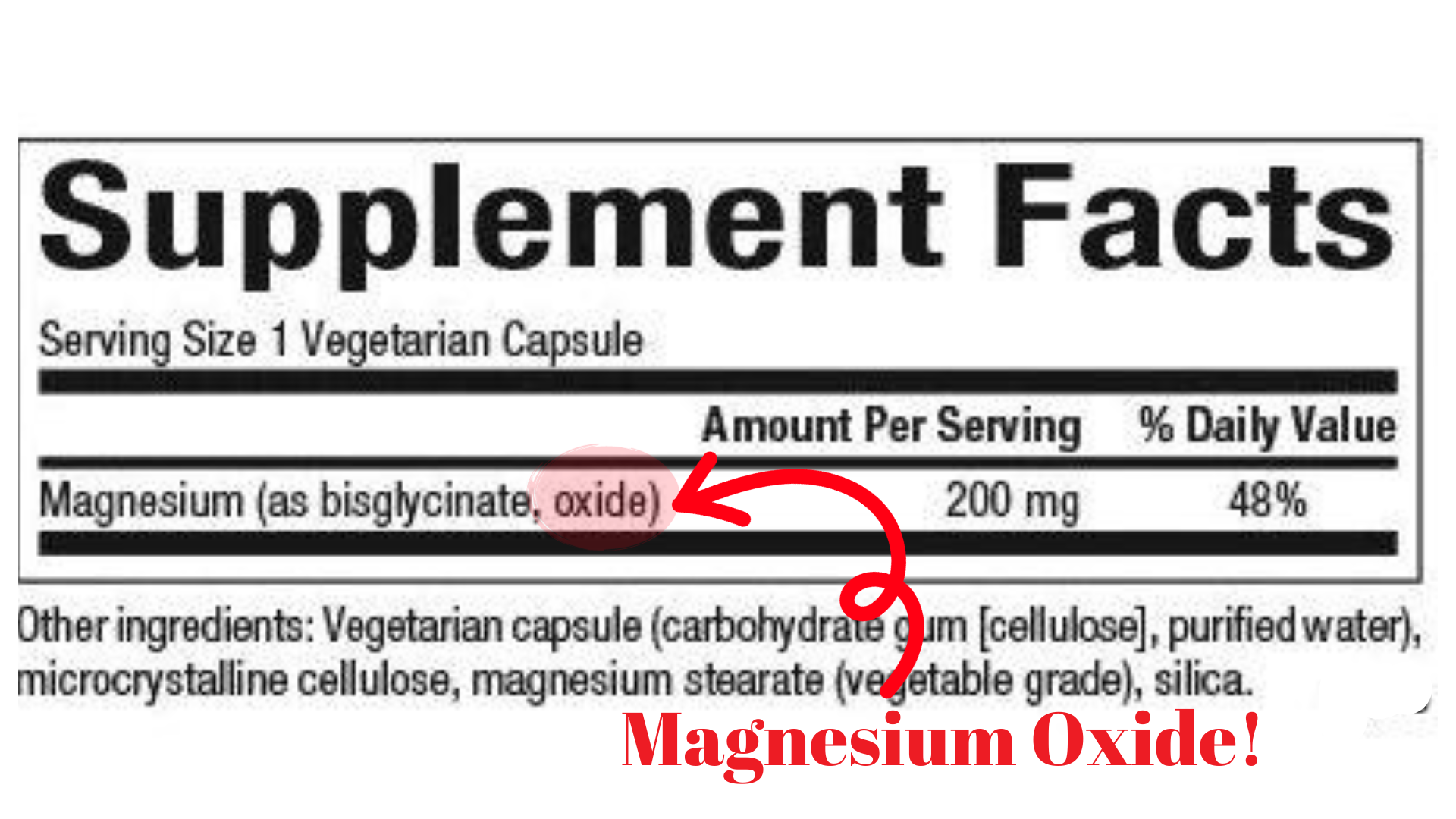
This is very important to understand. Not all magnesium glycinate (bisglycinate) is the same. Most magnesium glycinate and bisglycinate supplements are buffered. That means they are mixed with large amounts of magnesium oxide. Most supplement companies don’t even mention this on the label either. You might see it on the back of a label, but very often not.
Here is a photo of the back of a label of a typical magnesium bisglycinate supplement. Notice that it has been buffered with magnesium oxide. This isn’t mentioned on the front of the label, and most people don’t even notice, or know what this means.
The magnesium oxide is causing a lot of problems like poor absorption and diarrhea.
So even if your doctor recommends magnesium glycinate or magnesium bisglycinate, make sure you mention this topic about “buffered” magnesium. Unfortunately, most doctors and medical practitioners aren’t even aware of this fact. Share this article with them to let them know.
Magnesium Deficiency
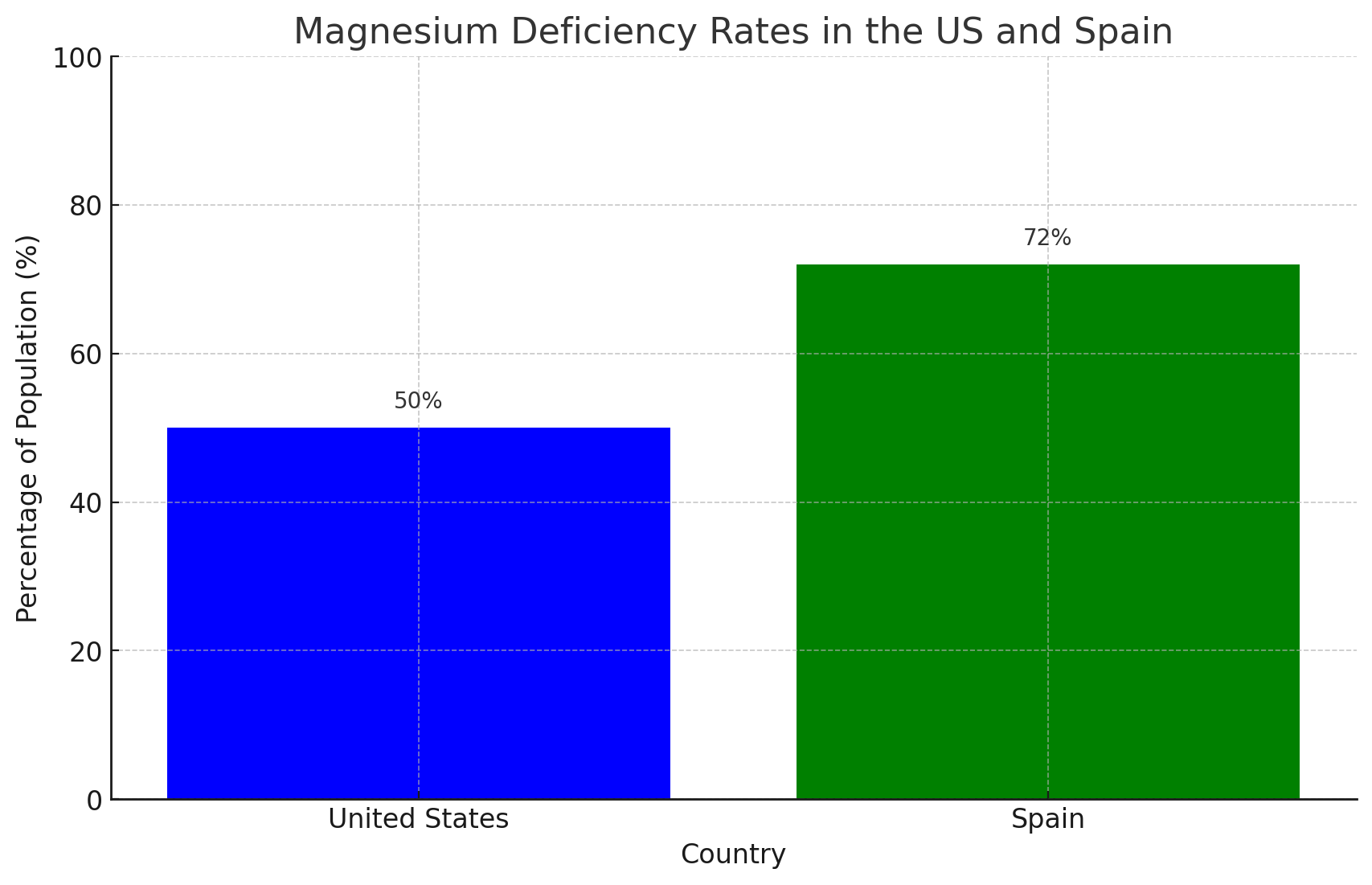
Significant portions of populations, including about 50% in the US and 72% in Spain, do not consume the daily requirement of magnesium. These numbers are for the general population and they are similar all over the world. The elderly often experience much higher deficiency rates of magnesium, especially menopausal women.
Magnesium Deficiency Rates in the US and Spain
Source: US: Research published in Advances in Nutrition, only about 50 percent of the United States population consumes the daily requirement of magnesium from their diets.
A study published in Nutrients reported that 72 percent of the Spanish population did not meet the EFSA-recommended intake of magnesium from their diets.
Recommended Dosage
The recommended daily dosage of magnesium bisglycinate for seniors is typically in the range of 300-400 mg, but this may vary, depending on the individual. These numbers are also referring to “elemental magnesium”.
Understanding “elemental magnesium” is very important when determining magnesium needs as well. We have a great explanation of elemental magnesium here.
Consult your healthcare practitioner if you need help determining your specific needs.
For more detailed information on check out this article on magnesium dosing.
Side Effects and Safety
The most common side effect of magnesium supplements is diarrhea. We discussed this in detail above. Non buffered magnesium bisglycinate has by far the least number of side effects of any magnesium supplement.
Here is a list of magnesium side effects to be aware of:
Gastrointestinal Issues: Common side effects include diarrhea, stomach cramps, and nausea. (Rare with non buffered magnesium bisglycinate)
Laxative Effect: High doses of magnesium can act as a laxative, cause diarrhea, and potentially lead to dehydration and electrolyte imbalances. (Rare with non buffered magnesium bisglycinate)
Interference with Medications: Magnesium can potentially interact with certain medications, including diuretics, antibiotics, and osteoporosis medications. (Always check with your doctor)
Kidney Function: People with kidney disease should be cautious and check with their doctor before supplementing with magnesium.
Overdose Risk: While rare, excessive magnesium intake can lead to magnesium toxicity. Symptoms include low blood pressure, irregular heartbeat, and mental confusion.
Blood Sugar Control: Magnesium can affect blood sugar levels, which is particularly relevant for people with diabetes or those on medications that affect blood sugar.
Natural Ways for Seniors to Enhance Bone Health
Beyond supplements, seniors can adopt other strategies for bone health:
Strength Training: Increases bone density.
Optimal Zinc Levels: Vital for bone-building cells. (Learn about zinc bisglycinate)
Healthy Diet: Rich in calcium, vitamin D, and protein.
Avoid Smoking and Limit Alcohol: Both harmful to bones.
Sunlight Exposure: For vitamin D production.
Conclusion
Effective bone health management is crucial for seniors, with non buffered magnesium bisglycinatebeing a key supplement to help with this. However, a holistic approach including diet, exercise, and lifestyle changes is equally important. Proactive steps and professional guidance are recommended for maintaining strong bones into senior years.
Below we will share some interesting scientific studies on this topic…
Participants: Not applicable, as this is a review of existing literature.
Key Findings: Magnesium is crucial for bone health, affecting bone mineral density and influencing the risk of osteoporosis. Studies have shown a correlation between low magnesium intake and reduced bone mineral density. Magnesium supplementation has been found beneficial in some cases of osteoporosis, particularly in populations with magnesium deficiency.
2. Study on Dietary Magnesium and Bone Health (2009)
Key Findings: Established a direct relationship between dietary magnesium intake and improved bone health. Supports the importance of adequate magnesium intake for bone health maintenance.
3. Magnesium Homeostasis and Bone Integrity (2012)
Participants: Menopausal women, a group at higher risk for osteoporosis.
Key Findings: Magnesium supplementation significantly increased bone density and helped prevent fractures. Magnesium supplementation can be beneficial for bone health in menopausal women.
5. The Effects of Magnesium Supplementation on Bone Turnover and Density in Older Adults (2021)
Study Overview: A randomized controlled trial examining the effects of magnesium supplementation on bone density in healthy older adults.
Participants: Healthy older adults.
Key Findings: Magnesium supplementation could be a valuable strategy for improving bone health and reducing osteoporosis risk in the elderly.
6. Impact of Magnesium on Bone Health in Older Adults: A systematic review and meta-analysis
Study Overview: This study is a meta-analysis of randomized controlled trials focusing on the impact of magnesium supplementation on bone mineral density (BMD).
Participants: Multiple randomized controlled trials, with a diverse group of participants, including different age groups and genders.
Key Findings: The study concluded that magnesium supplementation positively affects bone mineral density, particularly in populations at risk of magnesium deficiency.
Disclaimer: This article is for informational purposes only. This information is meant to share and discuss with your own doctor or healthcare practitioner. It is not intended to override their recommendations.
Disclaimer: This article is for informational purposes only. This information is meant to share and discuss with your own doctor or healthcare practitioner. It is not intended to override their recommendations.
Why is my doctor recommending magnesium injections?
There are many potential reasons why magnesium injections would be recommended. These include:
Severe hypomagnesemia – This is when your blood levels of magnesium show you are severely deficient.
Some cardiac arrhythmias
Migraine Prevention
Eclampsia and Severe Preeclampsia:
Patients who get severe diarrhea with supplemental magnesium
Patients who can’t, or dislike taking oral capsules
Patients who have been unsuccessful in increasing magnesium levels through oral supplementation
I don’t want to take magnesium injections, is there any alternative?
In some cases, there may be an alternative (again, discuss this with your doctor)
There are several reasons people may not want to take magnesium injections. Some of these reasons include:
Invasiveness and Discomfort: Supplements are less invasive and don’t cause discomfort.
Risk of Side Effects:
Convenience and Accessibility: Oral supplements are much more convenient.
Chronic Supplementation: For long-term needs, oral magnesium is usually more suitable. It’s easier to maintain steady levels of magnesium in the blood with daily supplements.
Cost: Oral supplements are generally far less expensive than injections.
Underlying Health Conditions: Individuals with certain health conditions may be advised against magnesium injections
Patient Preference – eg. Fear of needles
What type of oral magnesium can I take instead of an injection?
(Note: As noted above in the disclaimer section, you should share and discuss this with your doctor.)
The short answer is non buffered magnesium bisglycinate
The biggest issue with most (but not all) oral magnesium supplements on the market is that they absorb poorly and cause diarrhea as a side effect. The more magnesium you take, the worse the diarrhea is. This diarrhea also means that most of the magnesium you are ingesting is not absorbing into your body; therefore you effectively aren’t getting much magnesium at all.
If you need to take a significant amount of magnesium to increase the amount of magnesium in your blood, then you need to find a highly absorbing oral magnesium that doesn’t cause diarrhea or upset stomach as a side effect.
The best form of magnesium for not causing diarrhea is non buffered magnesium bisglycinate. (Same thing as non buffered magnesium glycinate).
“Non buffered” is absolutely key, because most magnesium bisglycinate (and glycinate) on the market is “buffered”, which means it has been mixed with large amounts of magnesium oxide. The magnesium oxide is actually what is causing the diarrhea and poor absorption. You need to read the labels extremely carefully. Unfortunately, most magnesium bisglycinate (glycinate) products don’t mention this fact on the front of the label, and many don’t even mention it on the back of the label either.
What type of magnesium is used in a magnesium injection?
Magnesium injections use the form magnesium sulfate.
Since magnesium injections use magnesium sulfate, does this mean that oral magnesium sulfate is the best form for an injection alternative?
It does not mean that. High absorption of magnesium with limited side effects is the ultimate goal with magnesium injections.
While it is possible to supplement orally with magnesium sulfate, we recommend non buffered magnesium bisglycinate when taken orally, because it has the highest absorption and causes the least number of side effects for any type of oral magnesium.
One of the best parts of co-founding a health supplement company is that I get to spend most of my time studying natural health, and I have quick access to any vitamin or natural supplement under the sun.
I’m always reading the latest scientific studies, and I like to treat myself like an experimental guinea pig to see what actually works for me, personally.
Before we dive into my story, please read the disclaimer at the bottom of the article before attempting any of the ideas in this article.
I’m currently 44 years old, and I’ve had chronic migraines since I was 7 or 8 years old. They were diagnosed as migraines by a neurologist. I also get regular headaches (sometimes very painful), the typical run-of-the-mill tension headache.
My migraines are like this: I get a terrible pain behind my right eye. I also get nerve pain on the right side of my neck. The migraine often comes with aura, and I can see little flashes of light. If I don’t take any medication to stop the migraine, it will get worse and worse, and I will ultimately get sick to my stomach and throw up. The pain could last for at least 24 hours, sometimes considerably more than that. I don’t need to go on and on with details, but needless to say, it’s absolutely terrible.
The cause(s) of my migraines:
For me, it felt like almost any potential migraine trigger was a personal migraine trigger for me. I had to be so careful all the time. Things that could cause my migraines were:
Not sleeping enough (or too much)
Stress
High or low blood sugar
Too much or not enough caffeine
Alcohol
Dark chocolate
Second hand cigarette smoke
Weather changes
Constipation
Cold feet
Not exercising enough, or exercising too much
Poor posture at the computer
Too much eye strain from too much screen time
……
The list goes on and on. This same list could also cause my regular headaches too, which are much different, but also very annoying and debilitating. These would usually be in the form of throbbing pain on both sides of my head.
Both migraines and headaches are usually described in binary terms. You either have a migraine currently, or you don’t have one. You either have a headache right now, or you don’t.
In my experience, it felt much different than that. If I was to rate the pain in my head from 0 to 100, I’d always be able to come up with some number in that range.
A score of 100, would represent the most painful migraine I’d ever experienced.
A score of 0, would be an incredibly good feeling, almost like my head was floating on a cloud. Even if I tried to think about and look for pain, I couldn’t feel anything.
If I had a score of 50 or above, I’d feel bad enough where I’d go and take medicine and lie down.
But I would often be living with a score of 20-30. This is a zone where I didn’t have a full on migraine or a headache, but I did feel some kind of dull ache somewhere in my head or upper neck, and it was at least somewhat annoying. I wouldn’t feel my best, and it would negatively affect my work and my mood. I wanted to live with a score of 0, or close to it, as much as possible. I want my head to feel great and completely pain free. Who wouldn’t want that?
The Anti Headache
I came up with the idea of the anti-headache, or the anti-migraine. For me, this is the great feeling in my head where my pain level is as close as possible to a 0. This is where I feel totally amazing in my head and upper neck.
I realized that the closer I could get to the state of the anti headache, the better I felt (obviously), and the fewer full blown headaches and migraines I would get were. If I was constantly feeling pain in the 20 – 30 range, not only was that annoying in and of itself, but it also meant I’d have far more real migraines and headaches in the 60-70 range of pain, which for me, was horrible, debilitating pain.
Instead of trying to get rid of painful migraines and headaches, and take pain relievers when I got them, I started actively looking at how I could get in the anti headache state, a state of zero pain at all in my head.
How I got into the anti-migraine zone:
First, I would make sure I was:
Going to bed on time and getting 7-8 hours of sleep per night
Eating a healthy and well-balanced diet without blood sugar spikes
Avoiding obvious triggers like too much alcohol, caffeine, or any dark chocolate
Exercising regularly
Trying to avoid unnecessary stress
And these things helped a lot. If I was regular with this list, I would get fewer bad headaches and migraines, and I would have lower pain levels on my 0-100 pain index. But the problem was, I still wasn’t in the anti-headache zone. My pain would still be in the 20-30 range most of the time, even though it seemed like I was “doing all the right things”.
What really tipped me over the edge and got me into the true anti migraine zone, where I felt essentially zero pain anywhere in my head, was my supplement regimen.
If you’ve ever read much on health supplements for migraines, you’ll find that feverfew, butterbur, and vitamin B2 are all highly recommended. These are the first supplements that pop up. I don’t have a particular issue with any of those, but they weren’t the best in my experience.
My anti migraine stack:
Here is what I take daily to get into my zero pain zone. This works for me for both anti headache pain and anti migraine pain. This daily combination gets me very close to 0 head pain of any kind.
Inflammation is the root cause of pain in general, including migraine and headache pain. These supplements lower the chronic inflammation, and therefore lower the amount of pain I experience, all the way down to zero pain. It isn’t just theory, it’s completely changed and improved my overall life quality.
Magnesium:
Most of the general population is deficient in magnesium, and migraine sufferers even more so. Non-buffered magnesium bisglycinate is the most relaxing, and highly absorbing form of magnesium. Most magnesium absorbs very poorly, and causes upset stomach and diarrhea. Non buffered magnesium bisglycinate is very gentle on the stomach and won’t cause side effects.
This type of magnesium lowers overall inflammation, improves magnesium deficiency, and relaxes the blood vessels, which are often constricted during a migraine or tension headache.
Magnesium also helps to block pain signaling, by binding to NDMA receptors and blocking calcium from entering the cell and transmitting pain.
High quality fish oil is an excellent source of the omega 3’s, DHA and EPA. These omega 3’s are highly anti-inflammatory. Most people have a diet which is far too low in omega 3’s and far too high in the pro-inflammatory omega 6 fatty acids.
Increasing the ratio of omega 3 to omega 6 fatty acids can lower overall pain and decrease the number of migraines you get significantly.
Zinc is an essential mineral, but until recently wasn’t often associated with migraine and headache. A recent 2023 study concluded there was “an inverse association between dietary zinc intake and migraine in adult Americans.”
Researchers found that individuals who consumed 15.8 mg of zinc per day on average, had 30% less migraines than those who consumed 5.9 mg or less per day.
They also found that taking even more zinc (19.3 to 32.5 mg daily) in the form of supplements reduced migraine risk by 38%.
One potential issue with zinc supplementation is that it is typically very hard on the stomach and can cause nausea in many people. This is especially concerning when someone has a migraine and is already feeling nauseous.
This is why we recommend non-buffered zinc bisglycinate. It has the highest absorption of any form of zinc, and it is extremely gentle on the stomach.
Vitamin d3:
Vitamin d3 is another great supplement for overall health, but it is rarely associated with headache and migraine.
The researchers of thisstudy realized that vitamin d3 is highly anti-inflammatory, so they studied it with respect to migraine.
They concluded: “2000 IU (50 μg)/day vitamin D3 supplementation for 12 weeks could improve headache characteristics and might reduce neuro-inflammation in episodic migraine.”
You will notice that these are quite specific doses and types of supplements. The difference in quality between seemingly similar products in the health supplement market is enormous. I don’t have time in this article to dive into exactly why these specific supplements are recommended. For example, why non buffered magnesium bisglycinate specifically is superior to another popular form of magnesium. I have written extensively about these differences on this website however.
My Experience with this supplement stack:
I took this anti-migraine stack everyday for 4 straight months. I recorded any migraines and headaches. I also recorded my overall pain in my head level from 0-100 twice daily.
My full blown migraines and headaches got less and less frequent and intense each month. My average pain level when I didn’t have a headache or migraine went down significantly too. Instead of often having a pain level of 20-30 out of 100, I’m now enjoying most days where my pain level is in the single digits or even 0. I’m literally experiencing my dream state of the “anti migraine” more often than not.
Another bonus I’ve noticed is that I’ve had far fewer cold’s or illnesses than I normally would have during this time. I’m also experiencing less aches and pains in my muscles and joints. This isn’t a major surprise since each supplement (magnesium, zinc, fish oil, and vitamin d3) are all known to be both good for the immune system, and good for reducing overall inflammation and pain, but it is a welcomed bonus to experience these effects in my own life.
I will absolutely be continuing this supplement stack from now on.
A word of caution: This is the exact stack that works for me personally. This article is my personal story, and it will hopefully be interesting and educational to millions of migraine and headache sufferers. You are encouraged to always check with your own doctor before starting any new supplement regimen.
Disclaimer: This article is not intended to provide medical advice or promote specific treatments for migraines. The article has also not been evaluated or approved by Health Canada or the FDA. The recommendations were also not part of a double blind research study and are the anecdotal findings of the author. Please consult a health care practitioner prior to making any changes to your current prescriptions or trying new treatments.
Pain is something we all experience, and it is something we want to get rid of. Strong painkillers can mask pain in the short term, but those come with serious side effects, and they don’t help eliminate what is causing the pain. The ultimate goal is to eliminate the root cause of the pain, and do it in the healthiest way possible, with the least number of side effects.
In this article, we look at the science behind using high quality fish oil supplements to reduce not only pain, but the chronic inflammation that causes the pain in the first place.
There are many different types of pain, but let’s first differentiate between acute and chronic pain.
Acute pain happens when you hit your hand with a hammer, get a bee sting, or accidentally bump your head into a wall. It happens suddenly, and it usually has a simple cause. Once the condition is healed, the acute pain goes away. Fish oil won’t help much at all with this type of acute pain.
Chronic pain is much more persistent. Examples of chronic pain are having arthritis in your joints, consistent headaches or migraines, muscle pain from fibromyalgia, or long lasting neck or back pain. High quality fish oil has the potential to significantly help manage chronic pain.
Although the conditions that lead to chronic pain are vastly different, the root cause of the pain is chronic inflammation.
“Our unifying theory or law of pain states: The origin of all pain is inflammation and the inflammatory response.”
Ok, so pain is caused by inflammation, but how does fish oil help?
Remember, we are talking about chronic pain, which is caused by chronically high levels of inflammation in the body.
If we hit our hand with a hammer, we want some inflammation to protect and heal this injury. But we don’t want our whole body to have high levels of inflammation all the time.
Unfortunately, many of us in the modern world are living with chronic inflammation. Chronic inflammation causes not just pain, but is often called a “silent killer” because it can lead to heart disease, diabetes, some types of cancer, and many other horrible diseases.
Fish oil helps reduce chronic pain because fish oil lowers chronic inflammation directly.
It’s actually the omega 3’s, DHA and EPA, in fish oil that lower inflammation, thereby lowering pain.
Omega 6 fatty acids are pro-inflammatory, and they increase inflammation in the body.
An important point is that we really want to consume a balanced ratio of omega 6 to omega 3 fatty acids. There is some debate over the healthiest ratio of omega 6 : omega 3 fatty acids in our diets. Some experts say 1:1 is the best. Others say up to 4:1 is still ok.
Regardless, most people aren’t even close to that ratio. Many people consume 20:1 omega 6 to omega 3’s in their diet, or even worse. Some people get virtually no omega 3’s at all.
Most people eat far too many omega 6 fatty acids. We get high levels of omega 6 from:
Potato chips
Crackers
Cookies
Most bread
Sunflower oil
Packaged snack foods
We also get omega 6 from healthy sources like:
Walnuts
Pumpkin seeds
Tofu
Eggs
Peanuts
An article by Harvard Health points out it is better to increase your intake of omega 3’s rather than to reduce your intake of omega 6’s to improve the ratio of omega 6: omega 3, and therefore improve your overall health. They correctly point out that some omega 6 fatty acids are healthy and necessary.
We’d like to add a major caveat though, and that is that most people are getting far too many omega 6 fatty acids from the packaged snacks they eat. The reason most people are eating far too many omega 6 isn’t because they are eating too much tofu and too many walnuts, it’s the packaged stuff. So for the vast majority of people, cutting out most of their omega 6’s is the way to go, in addition to eating significantly more omega 3’s.
If you are eating anywhere near the SAD (Standard American Diet), then you are overdoing the omega 6 to omega 3 ratio by a long shot. This is even true if you think you are eating healthy. The only way this ratio will be in a healthy balance is if you really go out of your way to eat a lot of omega 3’s, and you also go out of your way to get omega 6 fatty acids only from natural and healthy sources. It won’t happen randomly.
There are a lot of fish oil supplements on the market, and most of them aren’t great. If you want the pain relieving and other health benefits from fish oil supplements, you need to choose a high quality product. Fish oil is by definition just any oil from any type of fish. This is not going to cut it.
Look for a fish oil supplement that is:
Has zero mercury and other toxic heavy metals
High in both DHA and EPA (many are not)
In the natural and highly absorbing triglyceride form (most are in ethyl ester form)
From a clean source (like anchovies in Iceland)
Encapsulated in a way to avoid going rancid quickly
Preferably deodorized and flavored naturally with lemon oil to avoid fish burps and aftertaste
We always recommend checking with your doctor or healthcare practitioner before taking any new supplements. Fish oil may interact with blood thinning and some other medications.
How much fish oil should I take to reduce pain and inflammation?
There have been so many different studies done using fish oil, and each study uses different amounts. There is no agreed upon optimal dosage.
The RDI for men is: 1600 mg of total omega 3’s per day (DHA + EPA) The RDI for women is: 1100 mg of total omega 3’s per day (DHA + EPA)
Up to 3000 mg of total omega 3 is generally considered safe.
Some people take even more than that, but as mentioned above, always check with your doctor, especially if you are taking other medications and/or planning on a larger than generally recommended dosage.
What is the science behind fish oil for reducing pain?
Here are a few scientific studies discussing this:
This was a 16 week double blind study of overweight individuals with chronic osteoarthritis. They took 2000 mg of DHA and 400 mg of EPA from fish oil per day. The results showed that the fish oil group had statistically significant improvements in pain reduction and improved microvascular function and well-being.
This study looked at patients who were experiencing neck and back pain. These patients were on prescription NSAID’s, which are anti-inflammatory drugs like ibuprofen. They took 1200 mg of DHA and EPA from fish oil daily, and the majority noticed significant improvements in pain reduction. 59% of the people in the study even discontinued their prescription NSAID medication.
This study showed that increasing omega 3 intake and decreasing omega 6 intake (improving the ratio of omega 6 to omega 3) decreased both the frequency and severity of migraines in patients with chronic migraine.
Can I take Zinc and Magnesium supplements together?
Yes, you can take zinc and magnesium supplements together. You don’t have to take them at the exact same time each day, but you can if you prefer. Zinc and magnesium are found together in many of the same foods, and our bodies have evolved to handle them together. Supplements generally contain much more zinc and magnesium than what is found naturally in food, so we will discuss some of the pros and cons of taking them at the exact same time each day, vs taking them both in the same day, but not at the exact same time.
What is the recommended dosage for magnesium and zinc supplements?
Magnesium:
RDA (Recommended Dietary Allowance)
Men: 420 mg/day
Women: 320 – mg/day
UL (Upper Limit)
**Note: The UL is based on magnesium from supplements only
What are the health benefits of zinc and magnesium supplements?
There are many potential health benefits from taking zinc or magnesium supplements individually. Most studies focus on either zinc or magnesium. Here are some of the main benefits:
Zinc Health Benefits:
Reversing zinc deficiency
Helping to improve white blood cell count
Helping to improve immune system
Helping with testosterone production in males
Helping with wound healing and keeping skin healthy
Are there any potential side effects of taking magnesium and zinc supplements together?
In most cases, taking magnesium and zinc together is considered safe. Zinc and Magnesium on their own each have potential side effects.
Potential side effects from magnesium supplements:
Diarrhea (very common)
Stomach upset
Nausea
Vomiting
Potential side effects from zinc supplements:
Nausea (very common)
Indigestion
Vomiting
Headache
There are many forms of both zinc and magnesium supplements, and what a lot of people don’t realize is that there are forms that absorb far better than the other kinds and cause close to zero side effects.
Do zinc and magnesium inhibit the absorption of each other?
Very high doses of zinc, 142 mg per day, can inhibit the absorption of magnesium. Here is a study showing this.
Remember though, the UL (upper limit) of zinc is 40 mg/day for both men and women. 142 mg per/day of zinc is an extremely high dose.
At recommended doses of magnesium and zinc, are some synergistic effects of taking them together. Most of the studies on magnesium and zinc, are actually on magnesium, zinc, and vitamin B6 (A combination called ZMA). This combination can help with sleep, and help increase testosterone levels in men (not women, don’t worry).
Can I get enough magnesium and zinc from my diet alone?
It is possible to get enough magnesium and zinc from your diet by consuming foods such as leafy greens, nuts, seeds, and whole grains. However, many people aren’t able to get enough of these nutrients from their diet alone, and may need to supplement.
Also, just because you aren’t technically deficient in either zinc or magnesium, it doesn’t necessarily mean that you have an optimal level of either mineral. Many people experience benefits of taking more zinc and magnesium than the minimum amounts to avoid being deficient. Just remember not to take too much of either, especially for extended periods of time, unless specifically recommended by your healthcare provider.
Is it better to take magnesium and zinc supplements separately or together?
This really depends on the person, the amount of zinc and magnesium you are taking, and also the form of the zinc and magnesium.
Also, you can absolutely be supplementing with both zinc and magnesium at the same time, meaning in the same day. The question is should you take them at the exact same time, or should you take the zinc in the morning and the magnesium in the evening, or vice versa.
If you are taking zinc and magnesium within the recommended dose ranges, and you are taking them for sleep, then you can take both together before bed. Also, if you just like taking supplements together because you feel it is a waste of time to get the bottles out of the drawer more often than necessary, then you can take them together.
If you are taking extremely large doses of zinc, you should definitely take the zinc and magnesium at different times during the day, at least a few hours apart. Be extremely careful if you are taking very large doses of zinc because of zinc toxicity, and do so only under the direction of your healthcare provider.
Can I overdose on magnesium and zinc supplements?
It is possible to overdose on magnesium and zinc supplements if taken in large amounts. Symptoms of overdose may include nausea, vomiting, and stomach cramps. To be on the safe side, make sure you are not taking more than the recommended UL (Upper Limit) of either mineral, unless specifically recommended by your healthcare provider. Also, excessively high amounts of zinc can lower the amount of copper in your body, which is another essential mineral for optimal health. Zinc doesn’t appear to reduce copper significantly if you are taking recommended doses of zinc. Here is a study showing this.
This article will explain everything you need to know about how much magnesium you should take. We also explain how and when to take magnesium for best results.
The correct magnesium dosage depends on many factors, including:
Are you male or female?
Your age
Which type of magnesium are you taking?
Is the magnesium buffered?
What is the main reason you are taking magnesium?
Are you referring to “elemental magnesium”?
Let’s start with an overview of the Recommended Dietary Allowance (RDA) and the Upper Limits (UL) of magnesium per day.
RDA – Recommended Dietary Allowance:
This refers to the recommended daily intake of elemental magnesium from a combination of diet and supplements.
UL – Upper Limit:
This refers to the safe daily upper limit of elemental magnesium from supplements alone.
***NOTE: You may have noticed that the safe upper limit (UL) is often showing a lower number than the recommended dietary allowance (RDA). This is because the RDA is referring to total magnesium from diet and supplements, and the UL is referring to magnesium from supplements alone.
Table 1: Recommended Dietary Allowances (RDAs) for Magnesium
Age
Male
Female
Pregnancy
Lactation
Birth to 6 months
30 mg*
30 mg*
7–12 months
75 mg*
75 mg*
1–3 years
80 mg
80 mg
4–8 years
130 mg
130 mg
9–13 years
240 mg
240 mg
14–18 years
410 mg
360 mg
400 mg
360 mg
19–30 years
400 mg
310 mg
350 mg
310 mg
31–50 years
420 mg
320 mg
360 mg
320 mg
51+ years
420 mg
320 mg
*Adequate Intake (AI)
Table 3: Tolerable Upper Intake Levels (ULs) for Supplemental Magnesium
Age
Male
Female
Pregnant
Lactating
Birth to 12 months
None established
None established
1–3 years
65 mg
65 mg
4–8 years
110 mg
110 mg
9–18 years
350 mg
350 mg
350 mg
350 mg
19+ years
350 mg
350 mg
350 mg
350 mg
Important Insight:
You may have noticed that we’re using the term “elemental magnesium” and not just “magnesium”. This is essential to understand, even though most respected health websites don’t even mention it.
Magnesium supplements are never pure magnesium because pure magnesium is just a metal, which humans obviously can’t ingest. Magnesium for humans needs to be in some edible form like magnesium bisglycinate (glycinate), magnesium citrate, magnesium oxide, etc.
Elemental magnesium refers to just the magnesium component of these compounds, if you were to strip away the glycinate, citrate, or oxide parts of the molecules.
We have a very popular article on which explainselemental magnesium in detail.
What type of magnesium are you taking?
This is perhaps the most important and most overlooked question with regard to magnesium dosing.
The form magnesium is in matters immensely. What matters is not only how much magnesium you take, but also how much magnesium actually absorbs.
This is why talking about “magnesium” in general, without specifying which type of magnesium you are taking, actually doesn’t make a lot of sense.
Most magnesium supplements have very low bioavailability. This means they absorb very poorly in the body. Magnesium oxide, the cheapest and most popular magnesium supplement, absorbs at a rate of only about 4%.
Non-buffered magnesium bisglycinate has the highest absorption of any magnesium supplement.
What is non-buffered magnesium?
Buffered magnesium means that another form of magnesium has been added to it. Most magnesium bisglycinate supplements are buffered, even though the supplement label won’t say this. These supplements are usually buffered with high amounts of magnesium oxide, which has the poorest absorption.
Another major problem with taking a magnesium supplement that doesn’t absorb well (besides the problem of not getting the magnesium you need), is that it will cause stomach upset and diarrhea. Learn more about the form of magnesium that won’t cause diarrhea.
How much magnesium should you take from magnesium bisglycinate (non-buffered)?
Non buffered magnesium bisglycinate (which is the same thing as non buffered magnesium glycinate) has the highest bioavailability of any type of magnesium.
Our capsules are 500 mg of magnesium bisglycinate each, which is 50 mg of elemental magnesium. The rest of the 500 mg is the “glycinate” part of the molecule.
Because they absorb so well, many people feel great after only 1-2 capsules per day, which is only 50 to 100 mg of elemental magnesium.
Some people require even more magnesium, and they can safely take up to 6 of our capsules per day. This is 300 mg of elemental magnesium.
It is best to start with 1-2 capsules per day, and slowly work up if you feel you need more magnesium. Because these are non buffered, you won’t experience any nausea, diarrhea, or other gastrointestinal side effects.
There are many other forms of supplemental magnesium:
Magnesium Oxide
Magnesium Citrate
Magnesium Taurate
Magnesium Chloride
Magnesium Lactate
Magnesium Malate
Magnesium L Threonate
Magnesium Orotate
If you are taking any of these forms, you should make sure you stay under the UL (Upper Limit) per day based on the table above, or check with your healthcare provider.
Why are you taking magnesium supplements?
The reason you are taking magnesium supplements can affect the amount you should take.
There are many reasons you may wish to take magnesium supplements.
Some potential reasons are:
To reverse magnesium deficiency
To help with relaxation and sleep
To help with migraine
To reduce leg cramps
To reduce constipation
Note: If you are taking magnesium for the purpose of reducing constipation, you should actually take the form with the worst bioavailability. This is magnesium oxide. The side effect of magnesium oxide is making you run to the bathroom, hence reducing constipation. It isn’t the magnesium that is working, it is actually the fact that the magnesium isn’t staying in your body that is producing the results. For all other reasons of taking magnesium, you should take a magnesium supplement that absorbs very well.
Some people, for example, take magnesium to help them sleep. If they are able to sleep well with only 50 mg of elemental magnesium per day, then they may choose to not take any more magnesium. Other people may need closer to the Upper Limit (UL) per day to get the desired result. We have seen similar results with people taking magnesium to reduce migraines or leg cramps. The amount of magnesium that works for a specific condition varies quite a bit from person to person.
Remember to always stay within the safe recommended limits of magnesium intake unless your healthcare provider recommends otherwise.
Should I take magnesium in the morning or at night?
Customers are always asking us, “When should I take magnesium?”. “Can I take it in doses spread out during the day, or is it best to take it all at once?”
This largely comes down to personal preference. If you are taking it to help you sleep, then you can take it before bed. It will also help you reduce leg cramps at night.
Some experts recommend taking magnesium with meals because it can help reduce potential side effects like diarrhea.
We don’t make that recommendation because if you are taking non-buffered magnesium bisglycinate, then diarrhea won’t be an issue for you. Remember, non-buffered is key.
You can either space your magnesium supplements throughout the day, or take them all at once, whichever feels better for you.
Is it ok to take magnesium supplements every day?
Yes. If you are taking magnesium supplements at safe dosages (mentioned above) then you can safely take them every day. If you have any concerns about your unique health situation, you should speak with your healthcare provider.
Should I take magnesium with food, or on an empty stomach?
This is also a matter of personal preference. As mentioned above, some experts recommend taking magnesium with food in order to prevent any side effects like diarrhea. This is reasonable advice if you are taking the typical magnesium supplements you will generally find.
Since we recommend non-buffered magnesium bisglycinate supplements, you really have the luxury of taking them with or without, because side effects like diarrhea are not an issue.
Some foods inhibit the absorption of magnesium, so you may wish to take it on an empty stomach in that case. In a good form, magnesium is quite gentle on the stomach.
What inhibits the absorption of magnesium?
Many nutrients can interfere with, and inhibit the absorption of magnesium.
Zinc is an essential mineral that is involved in hundreds of bodily processes, including the production of testosterone. Testosterone is a hormone that is important for muscle growth, bone density, and other physical characteristics that are typically associated with men. A number of studies have shown that zinc deficiency is linked to lower testosterone levels, and that zinc supplements can significantly increase testosterone levels in men who are zinc deficient.
Does supplementation with zinc actually increase testosterone?
The first study involved 57 football players who took zinc (monomethionine aspartate), magnesium (aspartate), and vitamin B6 supplements for 8 weeks.
The results showed that the supplements improved muscle strength and power vs placebo.
The study also found that 30 mg of zinc per day significantly raised free testosterone levels.
Another study measured the relationship between cellular zinc levels and testosterone in 40 men of various ages, ranging from 20 to 80 years old. The study found that lower zinc levels were associated with lower testosterone.
The study restricted zinc in the diets of young men, and noticed a significant drop of 50% in their testosterone levels after only 5 months.
It also found that giving zinc supplements to older men who had marginally low zinc levels literally doubled their testosterone levels.
This suggests that zinc is important for regulating testosterone levels in men, and that zinc supplements can help increase testosterone levels in men who are zinc deficient.
This study suggests that up to a point, higher zinc levels will lead to higher levels of testosterone.
Note: It is important to understand that it is very easy to overdo it with zinc. You need to make sure you don’t have too much, as that will lead to zinc toxicity and other side effects like nausea and vomiting, and also lowering levels of copper and iron in the body.
A third study measured both thyroid hormone and testosterone levels in 10 wrestlers before and after they supplemented with oral zinc sulfate for four weeks. The researchers found that exhaustion exercise led to significant inhibitions of both thyroid hormone and testosterone concentration.
They also found that resting and exhaustion testosterone levels were higher after four weeks of zinc supplementation compared to before zinc supplementation.
This suggests that zinc supplementation can help improve performance in wrestlers by increasing testosterone levels.
This fourth study was similar to the 3rd study, but it was performed on 10 sedentary men instead of well-trained wrestlers. The researchers measured thyroid hormone and testosterone levels in 10 sedentary men before and after they were supplemented with oral zinc sulfate for four weeks.
In this study as well as the previous one, researchers found that resting and fatigue testosterone levels were higher after four weeks of zinc supplementation compared to before zinc supplementation.
This suggests that zinc supplementation can help improve performance in sedentary men by increasing testosterone levels.
Free and Total Testosterone:
You may have noticed that some studies mentioned zinc supplementation increased “free testosterone” and some studies said that zinc increased “serum” testosterone.
Free testosterone is the biologically active form of testosterone. This is the testosterone that your body is using at any given time.
Total testosterone (same as serum testosterone) is a measure of your free testosterone, plus the testosterone that is bound to proteins.
Free testosterone accounts for only 1 – 3 % of your total testosterone. Having low free testosterone is actually a more accurate predictor of physical side effects of “low testosterone” than total testosterone.
Different tests measure free testosterone or total testosterone. Both are important to understand, and they refer to different things.
The studies above show that zinc can increase both free and total testosterone.
What is the best form of zinc for increasing testosterone?
We recommend non buffered zinc bisglycinate, but this is an interesting question. It takes some understanding of all the scientific knowledge we have at this point to come to a reasonable conclusion.
Proper scientific studies are expensive, and there aren’t many of them. You may have noticed that in the studies listed above, they used different forms of zinc and compared them to a placebo when evaluating their effects on testosterone. They didn’t compare one form of zinc to another form of zinc.
So if they are using different forms of zinc in the studies, how do we know which is best?
Fortunately, we have other scientific studies that do compare the bioavailability(absorption) among various forms of zinc. Read this article to understand why zinc bisglycinate is a great form of zinc supplementation (includes scientific studies)
In terms of the best form of zinc for increasing testosterone, zinc bisglycinate is a highly bioavailable form of zinc that is easily absorbed by the body. This means that the body can easily use the zinc from this form of supplementation, making it a good choice for increasing testosterone levels.
Another reason zinc bisglycinate is a great form is that other forms of zinc can easily cause nausea and stomach upset. Non-buffered zinc bisglycinate at recommended doses will not. Read more here about zinc and nausea.
Quick note:
Zinc bisglycinate and zinc glycinate are 2 names for the same thing. Don’t be confused. You do want to make sure that the zinc bisglycinate you are getting is “non-buffered”. Non buffered zinc means that no inferior forms of zinc have been mixed into the final product. Non buffered zinc bisglycinate means 100% pure zinc bisglycinate.
Important point: Low zinc may increase estrogen.
Low zinc leads to an increase in estrogen receptors and a decrease in androgen receptors. Low levels of zinc may also lead to the aromatization of testosterone into estrogen. This can lead to men having puffy nipples and other unwanted side effects of estrogen.
How much zinc should I take if I want to increase testosterone?
The recommended daily intake of zinc for men is 11 mg, and the safe upper limit is 40 mg of zinc daily.
Read this for more information on zinc, with links to official government websites on recommended and safe dosing.
What happens if you take too much zinc?
If someone has too much zinc in their body, a condition known as zinc toxicity can occur. Symptoms of zinc toxicity can include nausea, vomiting, stomach pain, and diarrhea. In severe cases, zinc toxicity can lead to liver and kidney damage, and in extreme cases, it can be fatal. It is important to speak with a healthcare provider if you think you may have zinc toxicity, as they will be able to provide proper treatment. It is also important to follow recommended guidelines for zinc intake to avoid consuming too much.
Conclusion:
Zinc is an essential mineral that is involved in hundreds of essential bodily processes, including the production of testosterone.
Several scientific studies have shown that zinc deficiency is linked to lower testosterone levels, and that zinc supplements can increase testosterone levels in men who are deficient in zinc.
Low zinc leads to an increase in estrogen receptors and a decrease in androgen receptors. Low levels of zinc may also lead to the aromatization of testosterone into estrogen. This can lead to men having puffy nipples and other unwanted side effects of estrogen.
Zinc bisglycinate has the highest bioavailability (absorption) of any form of zinc on the market. It is easily absorbed by the body, making it the best choice for increasing testosterone levels. It also causes the least amount of side effects.
Supplemental zinc will significantly increase the levels of free and total testosterone for a male, up to a point. Be careful not to take more than the recommended upper limit of zinc daily (especially for prolonged periods of time) or you can experience significant side effects like nausea, vomiting, zinc toxicity, and losing too much copper and iron.
Zinc bisglycinate is one zinc atom combined with 2 molecules of the amino acid glycine. It is one particular form of supplemental zinc. Zinc bisglycinate has been shown to be superior to other forms of zinc supplements because it is more bioavailable (absorbs better) and is far easier on the stomach and GI tract.
What is the difference between zinc bisglycinate and zinc glycinate?
Let’s clear up something important: Zinc bisglycinate and zinc glycinate are 2 names for the same thing. Zinc bisglycinate is one zinc atom attached to two glycine molecules.
“Bis” means 2, referring to the 2 glycine molecules, so we prefer to use the name bisglycinate for clarity.
Zinc – A quick overview
Any zinc supplement is never “pure zinc”. It can’t be. The zinc atom (Zn 2+) on its own is a highly reactive metal. Therefore, zinc is always bound to other atoms to form one of the many types of zinc supplements you see in the market. These forms are all very different. You need to understand exactly which form you should use and why. Let’s dig deeper.
Why is Zinc Bisglycinate often considered the best form?
There are 2 main reasons for this:
One major reason is the high bioavailability, a fancy word for “absorption”.
Most forms of zinc absorb very poorly into the body.
Zinc bislycinate absorbs better than all other forms of zinc. Zinc gluconate, for example, the most common form of supplemental zinc, absorbs far less effectively than zinc bisglycinate.
Here is a study showing that zinc bisglycinate absorption is 43.4% better than zinc gluconate. The study also points out that zinc bisglycinate is very well tolerated (doesn’t cause stomach upset or other problems).
In another study measuring absorption 30 healthy females were randomly assigned to take zinc bisglycinate (60 mg of elemental zinc), zinc gluconate (60 mg of elemental zinc), or a placebo. The researchers measured the levels of zinc in the blood, as well as a marker for zinc-induced copper deficiency. They found that all the women who took zinc bisglycinate had significantly increased levels of zinc in their blood, while those who took zinc gluconate or placebo did not show a significant change. Also, none of the supplements lowered the amount of copper in the blood (which can be a concern with zinc supplements, especially at relatively high doses). Overall, this study shows that zinc bisglycinate was far more effective at increasing zinc levels in the blood than zinc gluconate.
In a third study 12 healthy women were given zinc bisglycinate, zinc picolinate, zinc gluconate, or zinc oxide. The researchers found that the women who took zinc bisglycinate had the highest levels of zinc in their blood. They also measured the levels of zinc in the red blood cells over the same period of time period. They found that the women who took zinc bisglycinate had the highest levels of zinc in their red blood cells. In order of bioavailability, the results showed zinc bisglycinate > zinc picolinate > zinc gluconate > zinc oxide.
The second reason for the superiority of zinc bisglycinate is that it is far easier on the stomach than other forms of zinc.
So not only do these other forms of zinc supplements absorb poorly, which makes them ineffective, they also cause stomach upset and nausea. Read our article here to find out why zinc bisglycinate is the best form for avoiding nausea.
Since zinc bisglycinate absorbs better than other forms of zinc, and it also causes less side effects like nausea, we would expect to see real-life benefits from choosing zinc bisglycinate.
Here is a double-blind, placebo-controlled study that illustrates this: 42 aerobically fit women aged 18 to 30 participated.
The researchers tested aerobic fitness before and after one month of three test protocols:
Protocol 1: 36 mg of iron (as ferrous sulfate), 15 mg zinc (as zinc gluconate), 2 mg copper (as copper gluconate), 2 grams of carnitine, and 400 mg of phosphatidylserine
Protocol 2: 36 mg iron (as iron bisglycinate), 15 mg of zinc (as zinc bisglycinate), 2 mg copper (as copper bisglycinate), 2 grams of carnitine, and 400 mg of phosphatidylserine
Protocol 3: placebo corn starch.
Note: The only differences between the supplements in groups 1 and 2 were the differences in mineral forms. Group 2 took all mineral chelates in the bisglycinate form.
After one month, the women who took bisglycinate chelate minerals, including zinc bisglycinate, showed both significantly lower 3-mile run times, and significantly further stationary bike distance (over 25 minutes) compared to both baseline (before supplementation) and the other two groups.
Benefits of zinc bislgycinate:
Reversing zinc deficiency
Helping to improve white blood cell count
Helping to improve immune system
Helping with testosterone production in males
Helping with wound healing and keeping skin healthy
Helping with eye health, taste, and smell
Helping with sleep Note: We also have a magnesium bisglycinate supplement that is non-buffered with no fillers. It is the purest form we have seen on the market.
What is “buffered” vs “non buffered” zinc bisglycinate?
“Buffered” means that some other form of zinc has been mixed together. (You don’t want this)
Non buffered zinc bisglycinate, means that zinc bisglycinate is the only source of zinc in the product, and that no other inferior forms of zinc have been added in.
Buffering is a huge problem with magnesium, for example, because a lot of companies will call a product “magnesium bisglycinate” but it is actually a buffered form of magnesium bisglycinate mixed with magnesium oxide.
This same potential for companies to buffer their zinc bisglycinate unfortunately also exists.
We make sure to sell 100% non-buffered zinc bisglycinate, and we put this information on the label so that our customers know what they are getting.
What is “elemental” zinc?
This is an extremely important question to understand. We also have a useful article to help you understand elemental magnesium and why that is so important.
Simply put, elemental zinc refers to only the mass of the zinc atoms in a compound. The amount of elemental zinc in a supplement is the number of milligrams the zinc atoms weigh in a zinc compound. It is the actual weight of the zinc atoms themselves.
Remember, supplemental zinc is never 100% zinc because that would be a metal. Zinc supplements are always together in some molecular compound. Eg. zinc oxide, zinc citrate, zinc picolinate, zinc orotate, zinc gluconate, zinc acetate, zinc sulphate, and zinc bisglycinate (glycinate).
In order to calculate the amount of elemental zinc in a zinc supplement, we need to go back to early basic high school chemistry for a second – Let’s use the example of zinc oxide because of its simplicity.
This is one zinc atom bound together with one oxygen atom. It is “ZnO”. An oxygen atom has a molar mass of 16, and a zinc atom has a molar mass of 65. The entire molecule has a molar mass of 81 (16 + 65).
So in one molecule of zinc oxide, we have 16/81 or approximately 20% oxygen, and 24/81 or approximately 80% zinc.
So 100 mg of pure zinc oxide has approximately 80 mg of “elemental” zinc.
As a side note, it also has 20 mg of “elemental oxygen”, but we don’t care much about the amount of oxygen we’re getting from this molecule.
So again, the elemental zinc is the mass of the “pure” zinc inside a molecule, once we strip away the rest of the molecule.
Zinc bisglycinate is a more complex molecule, but the same logic applies. If you look at the entire molecule and do some simple math, you will see that the zinc portion of the molecule is only about 30% “elemental” zinc. The rest of the molecule is the weight of the glycine.
(In the real world, when you get pure non-buffered zinc bisglycinate, the elemental zinc is approximately 25%, not 30%. 30% refers to only the theoretical amount of zinc)
That means you need 100 mg of pure (non-buffered) zinc bisglycinate to obtain approximately 25 mg of elemental zinc.
Note: Even though the % of elemental zinc is much higher in zinc oxide, and in several other forms of zinc, the absorption rates and the overall effects on the body make non-buffered zinc bisglycinate a far superior supplemental form in most cases.
What is “chelated” zinc bisglycinate?
Zinc bisglycinate is often called “zinc bisglycinate chelate”. This is the full name. Zinc bisglycinate is a “chelated” form of zinc. “Chelated” forms of a mineral mean that an amino acid has been attached to them. In the case of zinc bisglycinate, 2 glycine molecules have been attached to a zinc atom.
Whether you hear “zinc bisglycinate” or “zinc bisglycinate chelate”, don’t be confused, they are the same thing. As noted above, “zinc bisglycinate” and “zinc glycinate” are the same thing as well.
When shopping around, it is essential to make sure you are getting “non-buffered” zinc bisglycinate. Remember that term.
What is the best dosage to take?
This is an important question. It depends on the type of zinc supplement, your age, and sex.
The National Institutes of Health (NIH) lists the following daily upper limits (UL) of supplemental zinc. Here you can find the recommended amounts of zinc for more information.
Daily Upper Limits for oral zinc supplements UL
Age
Male
Female
Pregnant
Lactating
0–6 months
4 mg
4 mg
7–12 months
5 mg
5 mg
1–3 years
7 mg
7 mg
4–8 years
12 mg
12 mg
9–13 years
23 mg
23 mg
14–18 years
34 mg
34 mg
34 mg
34 mg
19+ years
40 mg
40 mg
40 mg
40 mg
Here is the table for the NIH Recommended Daily Amount of supplemental oral zinc.
RDA
Age
Male
Female
Pregnancy
Lactation
0–6 months
2 mg*
2 mg*
7–12 months
3 mg
3 mg
1–3 years
3 mg
3 mg
4–8 years
5 mg
5 mg
9–13 years
8 mg
8 mg
14–18 years
11 mg
9 mg
12 mg
13 mg
19+ years
11 mg
8 mg
11 mg
12 mg
One problem with the recommended dosages for zinc supplements is that the form of zinc is rarely mentioned. Since various forms of zinc supplements absorb at different percentages, this is quite concerning. The amount of elemental zinc that actually absorbs into the body is what is important, not just the amount of elemental zinc inside a capsule.
What are the side effects of zinc bisglycinate?
Zinc bisglycinate has far fewer side effects than any other type of supplemental zinc on the market. Read here about why it is the best form of zinc to avoid nausea. Zinc is also considered relatively non-toxic, especially taken orally.
Having said that, you still need to be careful with all forms of zinc. If you take too much zinc (in any form), you can experience zinc toxicity.
Excessive zinc intakes are in the range of 100 to 300 mg of elemental zinc per day. This range far exceeds the recommended dose of zinc (above)
The symptoms of zinc toxicity are:
Nausea
Vomiting
Epigastric pain
Lethargy
Fatigue
Another issue with too much zinc is copper deficiency. If you take too much zinc, you start to lose the copper in your body. Copper is another essential trace mineral. This can happen before you get to the zinc toxicity range.
Remember to always be careful with your zinc intake, and take zinc as recommended by your healthcare provider. Also pay close attention to the Upper Limit (UL), for daily zinc intake, which is listed above.
Zinc Q/A
Can I take zinc every day?
The short answer is yes. You can safely take zinc supplements every day. You already get some zinc every day, through your diet. It is essential to make sure you are not taking too much zinc though, as that can cause zinc toxicity. Please refer to the section above on zinc dosing.
Another thing to understand is that you don’t always need to take zinc every day, and more specifically, you don’t need to take the same amount of zinc every day.
You may choose to take more zinc daily for short periods of time, like when you feel a cold or flu coming on, if you feel a cold sore coming on, if you are over tired or over stressed, or if you feel weak and run down. Just make sure that you stay below the UL (Upper Limit) listed above, unless only for a short time, or you check with your healthcare provider for more information on your particular situation.
Is 50 mg of zinc too much?
A lot of people ask us if 50 mg of zinc is too much. 50 mg of zinc per day is above the UL (upper limit). We certainly wouldn’t recommend taking 50 mg of zinc every day, as this could lead to the potential serious side effects of zinc which are mentioned above.
Some supplement companies do offer zinc tablets or capsules which are 50 mg each. Some customers may feel they are getting a better deal, or a more powerful zinc supplement, so they may choose to get these for this reason. We would highly recommend that you be careful if you purchase these. It is larger than a safe daily dose for long term use.
With that said, there are some studies where zinc is safely taken at higher doses than 50 mg per day, but these studies are purposely short in duration, and are not meant to be continued every day for the rest of your life.
This is a major reason we offer our zinc in 25 mg per capsule. It provides our customers with more flexibility. If they really need to get 50 mg of zinc for a short time, they can take 2 capsules. If they prefer to take zinc daily, then our capsules are already made within a safe dose for long term use for both men and women.
Does zinc increase testosterone in females?
No, is the short answer. This is not something women need to worry about. A lot of men take zinc supplements, because they know it can increase their testosterone levels. Women are understandably wondering, will zinc increase their testosterone levels too?
Male and female bodies are different. Taking zinc isn’t at all like taking anabolic steroids’. It is not like putting pure testosterone into your body. Zinc is more like a building block. If you are male and have testicles, zinc will help you produce a healthy amount of testosterone, but if you are female, zinc will help your reproductive system in other ways. Here is an interesting study about how zinc benefits the female reproductive system.
If you are female, zinc will balance your reproductive hormones in a healthy way, not make you have higher than normal testosterone levels.
What time of day should I take zinc?
Personal preference is the main factor determining when you should take zinc. This basically means you can take zinc “whenever you want”.
There is some evidence that it may help you improve your sleep when you take it at night.
Some people would rather take zinc during the day, however, and that is totally fine. Your body will metabolize and utilize zinc the same way.
Should I take zinc with food or on an empty stomach?
In terms of increasing absorption, it is recommended that you take zinc either an hour before, or 2 hours after meals. This is because fiber and phytates in food inhibit the absorption of zinc. Taking it on an empty stomach will increase absorption.
There is a big caveat though, because zinc supplements, especially on an empty stomach, often make people experience nausea. In this case, you can take your zinc with food.
This is another major benefit of non-buffered zinc bisglycinate. It doesn’t cause nausea, and therefore you can take it much more easily on an empty stomach. If you prefer to take it with food, it will still absorb better than other forms of zinc.
Where to buy non buffered zinc bisglycinate?
Click here to buy our premium non buffered zinc bisglycinate. We have thousands of monthly loyal customers from all over the world who truly love the benefits they get from our high absorption zinc, and without the side effects.
Zinc is an excellent supplement for boosting the immune system and helping improve many areas of overall health.
Unfortunately, one major reported side effect from zinc supplements is nausea and upset stomach. This is not only uncomfortable, but it causes many people to avoid zinc supplements altogether.
The good news is that it absolutely doesn’t have to be this way. If you choose the right zinc supplement and take it properly, it won’t make you feel nauseous at all.
There are 4 main reasons why zinc supplements can cause nausea. They are all easy to address.
Not taking the right form of zinc.
Taking too much
Not taking with any food
Not having enough water
Let’s quickly address each one.
1. The best form of zinc supplements is non-buffered zinc bisglycinate.
This is not only the best form for avoiding upset stomach, but it also absorbs the best and is the most effective.
Zinc supplements always come in some form other than pure zinc. Pure zinc is a metal, and you can’t eat it on its own. When we talk about taking “zinc” supplements, we aren’t just taking “zinc”, we are taking some form of zinc. Some other supplemental forms of zinc are zinc oxide, zinc citrate, zinc picolinate, zinc orotate, zinc gluconate, zinc acetate, zinc sulphate, and zinc bisglycinate (glycinate).
We have researched all the forms of zinc, and the best form is zinc bisglycinate.
Zinc bisglycinate is one atom of zinc attached to 2 glycine molecules.
When zinc bisglycinate reaches the GI tract, the entire molecule is still intact. Because the molecule is intact, it doesn’t compete with other minerals for absorption. This not only helps it to absorb better, but it also helps by causing significantly less irritation (less nausea and upset stomach). Scientific studies on zinc bisglycinate also demonstrate that it is well-tolerated and causes few side effects.
It is human nature to think that if something is good for you, then more of it must be even better for you. This is not the case with most supplements, and certainly not the case with zinc. A little goes a long way.
First of all, the more zinc you take, the more likely you are to experience side effects like nausea. This is common sense, and also what people actually experience.
The other issue with zinc is that if you take too much zinc, then that will lower the amount of copper in your body (another essential mineral) to unhealthy levels.
The National Institutes of Health (NIH) lists the following daily upper limits (UL) of supplemental zinc. Here you can find the recommended amounts of zinc for more information.
Daily Upper Limits for oral zinc supplements UL
Age
Male
Female
Pregnant
Lactating
0–6 months
4 mg
4 mg
7–12 months
5 mg
5 mg
1–3 years
7 mg
7 mg
4–8 years
12 mg
12 mg
9–13 years
23 mg
23 mg
14–18 years
34 mg
34 mg
34 mg
34 mg
19+ years
40 mg
40 mg
40 mg
40 mg
Here is the table for the NIH Recommended Daily Amount of supplemental oral zinc.
RDA
Age
Male
Female
Pregnancy
Lactation
0–6 months
2 mg*
2 mg*
7–12 months
3 mg
3 mg
1–3 years
3 mg
3 mg
4–8 years
5 mg
5 mg
9–13 years
8 mg
8 mg
14–18 years
11 mg
9 mg
12 mg
13 mg
19+ years
11 mg
8 mg
11 mg
12 mg
It is worth pointing out that the NIH, and virtually all governmental bodies, talk about “oral zinc” but never specify or differentiate between the different forms of zinc supplements.
They do give a decent guideline though, and the idea is that an adult shouldn’t be taking much more than 40 mg of zinc per day, and if they do for a short period of time, they shouldn’t do it daily for an extended period of time.
Our high absorption zinc bisglycinate comes in 25 mg capsules of elemental zinc. Because it is so well absorbed, a small amount of it has a similar effect to larger amounts of other types of zinc, and without any side effects.
3. Not taking with food.
This is an easy one. Some people either forget to eat when they take zinc, or they wish to get the most absorption possible. The problem is that taking zinc on a completely empty stomach can cause nausea and upset stomach more easily. If you insist on taking it on an empty stomach, then zinc bisglycinate is still the best form to do it with. It is better to have at least a little food in your stomach, so the zinc doesn’t go straight to the lining. This helps a lot.
4. Not taking enough water.
This is similar to the food idea. Taking zinc with a large glass of water is a good idea. Zinc bisglycinate is soluble in water. The water helps spread the zinc evenly around the stomach, so there is no concentrated zinc irritating the stomach anywhere.
So even if you are quite sensitive to zinc and find that even small amounts of it cause upset stomach, nausea, or even vomiting, then we believe based on research and experience that you will benefit greatly from these tips.