


All posts by 88herbs

Magnesium for Migraines – Best Form, Prevention, Evidence

In this article we are going to look at the science behind magnesium for migraines.  We will also discuss the best form of magnesium for preventing and possibly treating the pain associated with migraine headaches.

Does magnesium help with migraines?

The evidence looks promising that supplementing with magnesium daily can help reduce both the frequency and intensity of migraines.  We will analyze the studies below.

Does magnesium help only with migraine prevention or can it actually cure migraine pain?

While magnesium supplementation appears to help with both the frequency and intensity (pain) of migraine headaches, it is not clear in most studies if supplementing with magnesium will help cure a migraine that you already have.  

Note: There is some evidence that it could help with acute migraine (see studies below)

Basically this means that you need to be taking enough magnesium daily to reduce the frequency and pain of your future migraines. If you take magnesium only while you have a migraine, you probably shouldn’t expect much.  If you get migraines on a regular basis, then now is the best time to start supplementing with magnesium.

What is the best form of magnesium for migraines?

There are many different forms of magnesium on the market.  The truth is that not all of them have been studied or compared to each other in order to prove scientifically which form works the best.

With that said, we highly recommend using magnesium bisglycinate (same as magnesium glycinate).  We specifically recommend non-buffered magnesium bisglycinate.

Read this detailed article for more information on magnesium bisglycinate.

The reason we recommend this form is that it absorbs better than other forms of magnesium, and specifically it won’t cause diarrhea.

Another benefit of magnesium bisglycinate is that it is very relaxing.  It contains the amino acid glycine, which helps reduce anxiety and pain perception

It can help with muscle cramping and help relax tight muscles – which often occur in the neck of migraine sufferers.

How does magnesium work to help with migraine?

Magnesium does a few important things that help both headache and migraine sufferers.

  1.  Magnesium relaxes the muscles all over the body, including in the head and neck.  Tight muscles in the head and neck contribute to migraine, and relaxing these muscles helps to avoid migraines and tension headaches.
  1. Magnesium relaxes the blood vessels.  Constricted blood vessels cause pain and can lead to migraine. 
  1. Magnesium blocks pain signaling.  It does this by binding to the NMDA receptors and not allowing calcium to enter the cell and transmit pain signals.

What is the scientific evidence of magnesium for migraines?

Study 1:

Here is a study that notes the strong correlation between people suffering from a migraine and having very low magnesium levels.  

They also point out that it is very difficult to accurately measure magnesium deficiency with routine blood work.  They recommend using proxy measures that hint at a deficiency, such as cold hands and feet.  

Here is a quote from their conclusion:

“In patients with symptoms suggestive of hypomagnesemia such as pre- menstrual syndrome, cold extremities and foot or leg cramps, we suggest daily magnesium supplementation with 400mg of chelated magnesium, magnesium oxide or slow-release magnesium.”

Note:  They go on to mention that some people may experience diarrhea from their recommendations.  This is one major reason we suggest not using magnesium oxide. 

Study 2:

This placebo controlled study looked at whether magnesium supplementation could reduce the frequency and severity of migraines in children.  

They concluded that magnesium supplementation significantly reduced the frequency of migraines, as well as significantly lowering the migraine severity (pain) compared to placebo.

Study 3:

This study was a review of several different studies on magnesium’s role in migraine prevention and reducing migraine severity.

They found some evidence of reduction in both intensity and frequency of migraines when compared to placebo.

What is the proper dose of magnesium to prevent migraines?

The dose really depends on the type of magnesium, how deficient someone is, and if you are male, female, or a child.

Some studies looked at doses as low as 200mg of magnesium, and some were as high as 1 gram.  It is advised to always read the labels and check with your doctor or healthcare practitioner.

Generally speaking, the daily requirements of magnesium are:

Men:  400 mg per day

Women:  300 mg per day

Children:  200 mg per day

What do I do if my magnesium supplement is causing me diarrhea?

Diarrhea, loose stool, or stomach upset is often listed as one of the most common side effects of magnesium supplementation.  In fact, a lot of people take magnesium oxide, for the purpose of relieving their constipation – it is that effective.  

Most often different forms of magnesium will be recommended which are easier on the stomach, such as magnesium glycinate, but it is almost never mentioned that most magnesium glycinate supplements are buffered (mixed with oxide).  

You really need to try pure, non-buffered magnesium bisglycinate.  There is no oxide in this supplement at all.  Read more detail here about magnesium that won’t cause diarrhea.

Which magnesium supplement should I buy to help me with my migraines?

We recommend our pure, non-buffered magnesium bisglycinate.  We use premium veggie capsules and no magnesium stearate.

ltheanine and ashwagnadha in combination

L-Theanine and Ashwagandha – Why it is a Great Combination

In this article we look at the science behind taking both ashwagandha and l-theanine together.

The benefits of combining l-theanine and ashwagandha

High quality l-theanine together with KSM-66 ashwagandha is one of our absolute favorite natural supplement combinations. This combination can help lower stress, reduce anxiety, improve sleep, improve mood, and improve mental focus and concentration

Which is better, ashwagandha or l-theanine?

The answer is really a personal choice. Some people prefer one over the other. Many people enjoy them in combination.

Ashwagandha works by:

  • Lowering the stress hormone cortisol: We have chronically high cortisol levels in our society. Lowering the stress hormone helps significantly reduce stress and anxiety
  • Balancing our hormones: Our hormones are out of whack. Ashwagandha is an adaptogen, and it helps bring our hormones back to a balanced state of homeostasis.

Check out our article to learn more about KSM-66 ashwagandha

Chronically high cortisol levels are a problem in our society, and they create a lot of elevated health risks. If you can lower your cortisol levels, then you can sleep better, feel less stressed and less anxious, have lower inflammation, and be in overall better health.

L-theanine works in a few major ways:

  • Increases alpha brain waves: This helps to give us a sense of “wakeful relaxation”. This is good for non-drowsy daytime relaxation.
  • Increases GABA: This helps increase our relaxation and improve our mood and concentration
  • Lowers levels of excitatory neurotransmitters: This helps lower stress and anxiety by lowering these neurotransmitters

For more information click here to learn more about-l theanine.

What are the benefits of l-theanine and ashwagandha?

L-theanine and ashwagandha are quite complimentary in terms of their benefits, but the mechanisms of action are quite different. Ashwagandha works more on a hormonal level, especially with cortisol. L-theanine works more on the neurotransmitters.

Benefits of L-Theanine:

  • Promotes relaxation
  • Improves mood
  • Sharpens mental focus
  • Reduces stress and anxiety
  • Improves sleep duration and quality
  • Helps with blood pressure
  • and more…

Here is an interesting study showing that l-theanine is beneficial for sleep, depression, and anxiety.

The study concluded:

“Stress-related symptom (i.e., depression, anxiety-trait, and sleep) scores decreased and cognitive function (i.e., verbal fluency and executive function) scores improved after four weeks of L-theanine administration.”

Learn more about l-theanine

Benefits of KSM-66 ashwagandha:

  • Lowers stress and anxiety
  • Promotes sleep
  • Helps muscle strength and recovery
  • Improves memory and cognition
  • Helps male and female sexual wellness
  • Reduces inflammation
  • Increases testosterone in males
  • And more…

Here is an interesting study showing that KSM-66 ashwagandha is beneficial for stress and anxiety.

The study concluded that:

“high-concentration full-spectrum Ashwagandha root extract safely and effectively improves an individual’s resistance towards stress and thereby improves self-assessed quality of life.”

Learn more about KSM-66 ashwagandha

Are there any studies that combine ashwagandha and l-theanine?

Currently there are no scientific studies that combine only ashwagandha and l-theanine against a placebo. This does not mean, however, that we can’t deduce anything from the combination, we just need to be cautious when we try to make a clear claim with the combination. There are many products which combine both of these ingredients. Our Zen+ is a great daytime calming formula that combines l-theanine, ashwagandha, and several other powerful herbs and amino acids (rhodiola rosea, 5 HTP, passion flower, l tryptophan) and the vitamins B3 and B12 (methylcobalamin) and non-buffered magnesium bisglycinate

What are proper doses of l-theanine and ashwagnandha?

Ashwagandha dose:

Each type of ashwagandha is different. For KSM-66 ashwagandha, the proper dose is 300 – 600 mg per day. This can be safely combined with l-theanine.

L-Theanine dose:

For pharmaceutical grade l-theanine, a good dose is 250 mg per day. Some people take anywhere from 50 mg up to even 400 mg per day. It can be safely combined with ashwagandha.

Which forms of l theanine and ashwagandha are the best?

We do everything we can to find and source the highest quality ingredients in the world.

L-Theanine – We use a pharmaceutical grade l-theanine. Click here to buy l-theanine. We discovered that a lot of l theanine on the market actually contains “d” theanine, which is not the form that you want. We get 3rd party testing on each of our ingredients to ensure quality. Our l-theanine is over 99% pure, and we never use any unhealthy fillers like magnesium stearate.

Ashwagandha – We use 100% KSM-66 ashwagandha. Click here to buy KSM-66 Ashwagandha. There are huge differences in quality between different brands of ashwagandha. A lot of ashwagandha comes from China, it tastes terrible, and it is very low in active ingredients (withanolides). Our KSM-66 ashwagandha is the most studied ashwagandha on the market. It tastes great, it is organic and non-GMO, it has a very high concentration of active ingredients (5% withanolides) and it is incredibly calming and effective.

Curcumin for Knee Pain and Inflammation

curcumin for pain and inflammation

Curcumin can help significantly reduce knee pain and inflammation. It has been shown to be more effective than NSAIDS like ibuprofen and diclofenac sodium, but without the GI side effects. The type of knee pain you have matters, as does making sure you get a curcumin supplement that actually absorbs well.

1. Does it actually work?

Yes. Curcumin has been shown to be very effective in both clinical studies and anecdotally. Here is a famous study showing that curcumin extract was as effective (and without side effects) as 800 mg of ibuprofen per day for patients with knee OA (osteoarthritis). The results compared pain for level walking and pain during walking up stairs. They also compared performance in terms of the time it took patients to walk 100 meters.

Here is a study showing curcumin is superior to the NSAID diclofenac sodium in treating rheumatoid arthritis, and again with less side effects.

Here is a very recent double blind study showing that curcumin was significantly more effective than placebo at reducing knee pain and improving knee function.

Important note:
Interestingly, while ibuprofen has stayed the same, curcumin supplements have been dramatically improving over the last several years by adding piperine (black pepper extract) to increase absorption by 2000%. Also, the better forms of curcumin provide a much higher concentration of the active ingredients (curcuminoids) as well as ensuring all 3 active ingredients are present: curcumin, dimethoxycurcumin, and bisdemethoxycurcumin. Premium Curcumin

2. How does it work?

Curcumin works by lowering inflammation around the joint. When the inflammation and swelling subside, the pain goes away because there is no pressure on the surrounding pain receptors. The mobility of the knee joint improves as well.

Curcumin works to lower inflammation by deactivating NF-kB. It is a selective COX-2 inhibitor, which is a similar mechanism to NSAIDS. If you want to read about the very complex mechanism of curcumin action you should check out: STUDY

3. What kind of Knee Pain does it work with?

Curcumin supplementation helps lower pain and inflammation for patients with both rheumatoid arthritis (RA) and osteoarthritis (OA). It also helps to increase range of motion and improve performance.

Many people with chronic knee pain from age, ACL or MCL tears, or general knee sprains also report significant improvement in improved range of motion and less overall discomfort.

4. Which kind to get? Curcumin vs Turmeric. Why C3 Complex.

After over 2 years of research, we found that curcumin C3 complex with bioperine to be the most effective.

Curcumin C3 complex is unique because it contains high levels of all 3 active ingredients in turmeric: curcumin, dimethoxycurcumin, and bisdemethoxycurcumin. It also contains a patented form of black pepper extract called bioperine, which has been shown to increase the absorption of curcumin by 2000%.

5. What Dose do I need?

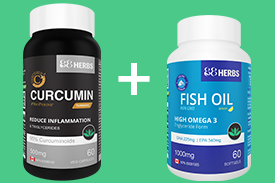
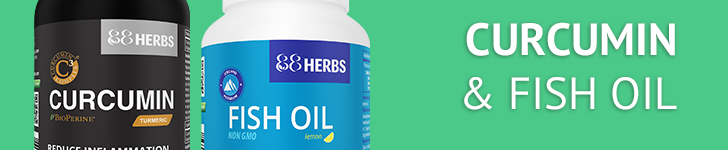
500 mg of curcumin plus 5 mg of bioperine twice daily. If you want to increase absorption even further, and also enjoy the anti inflammatory benefits of the omega 3’s DHA and EPA, you should consider combining it with our mercury free lemon flavored fish oil from Iceland.

Here is a link to the benefits of curcumin and fish oil together.

Curcumin and fish oil together

curcumin fish oil benefits

Taking curcumin and fish oil together increases both the absorption of curcumin and the absorption of omega 3 fats from fish oil (DHA and EPA) than taking either alone.

Curcumin and fish oil taken together is a powerful synergistic combination for a large number of health conditions. Both curcumin and the omega 3’s from fish oil are anti inflammatory. They are both effective individually but even more powerful when combined. Fish oil and a specific type of curcumin (C3 Complex) have also been shown to lower triglycerides in the blood and help with metabolic syndrome.

Its worth mentioning that it is not just any fish oil or any curcumin.  They need to both be extremely high in quality.  Here is a great guide on how to choose the best quality fish oil.  We mention more below about the type of curcumin to take.

Why take together?

1. Curcumin is fat soluble, meaning it dissolves in fat. The omega 3 fats from fish oil (DHA and EPA) help the curcumin absorb more than the dry powder alone. Also, an extract from black pepper called piperine helps improve curcumin’s absorption by over 2000%. Curcumin, which is the main active ingredient from turmeric extract, absorbs very poorly on its own. Therefore you can increase the absorption substantially when combining it with both omega 3’s from fish oil and black pepper extract.

2. The omega 3’s in fish oil (DHA and EPA) also absorb better when taken together with curcumin. DHA in particular has been shown to cross the blood brain barrier more readily when taken with curcumin.

What will the combination help with?

  • Knee and joint pain
  • Rheumatoid arthritis
  • Lowering triglycerides
  • Migraines
  • Lowering overall inflammation
  • Liver health

How do fish oil and curcumin work to help with inflammation?

The DHA and EPA in fish oil help to reduce inflammation (and pain) from lowering the amount of C-Reactive protein in the body – a major marker of inflammation.

Curcumin lowers inflammation by reducing enzymes linked to inflammation such as COX-2. Interestingly, this is also how non steroidal anti inflammatory medicines (NSAIDS) like ibuprofen work.

In fact, curcumin has been shown to be even more effective than NSAIDS for rheumatoid arthritis like in this study

What studies have been done to show the benefits of the combination?

Here is a study showing the dramatic benefits from combining curcumin and omega 3’s to both prevent and treat migraines.

What is the recommended dose of each?

Curcumin – 500 mg, twice per day (plus 5 mg of piperine per dose)

Fish oil – 1000 mg of omega 3’s (DHA + EPA) per day

Which specific types of curcumin and fish oil do you recommend?

Curcumin – C3 Complex – This patented form of curcumin combines the 3 active ingredients in turmeric. These 3 active ingredients are called curcuminoids, and they are curcumin, demethoxycurcumin (DMC) and bisdemethoxycurcumin (BDMC). It also contains bioperine, a patented form of piperine, or black pepper extract. This is the most studied form, the most absorbable, and is the most effective overall. It dramatically lowers inflammation and triglycerides in the blood. It is also a powerful antioxidant.

Fish Oil – We have a premium form of fish oil from Iceland. It has the lowest mercury and heavy metal content. It is very high in DHA and EPA. It is also in the most absorbable form, which is the natural triglyceride form. Ironically, the “triglyceride form” is the superior form, and it actually lowers blood triglycerides. It also won’t give you fish burps and is combined with natural lemon oil.

Leg Cramps at Night – Type of Magnesium that Actually Works!

Magnesium for night leg cramps

Millions of men and women (especially those over 50 years old) get painful leg cramps almost every night. Most often they are harmless, except for the fact that they really hurt and will ruin your otherwise peaceful sleep.

These nocturnal leg cramps feel like a sudden tight and painful knot in the calves, feet, quads, or hamstrings. They make us jolt out of bed in agony.
.

Magnesium Consumption

Most of us are not consuming enough magnesium through our diets. We also lose a lot of the magnesium we do get from sweating, poor absorption, excess sugar or caffeine intake, and even aging. This is why this condition gets more and more common as we age.

We also get too much calcium (which makes muscles contract) compared with our magnesium intake (which makes muscles relax). This out of whack calcium to magnesium ratio leads to a buildup of lactic acid and painful muscle cramping of the calf and other leg muscles.

This article from Harvard Health discusses some common causes of muscle cramping. It mentions that cramps can occur from “a deficiency of magnesium”. It also mentions that dehydration can make the cramping worse (more on this below).

What does the science say about taking supplemental magnesium for leg cramps, and why is it confusing and misleading?

There is a lot of misinformation about magnesium supplementation. It is essential to always keep in mind that magnesium supplements come in many different forms (such as bisglycinate, citrate, oxide). All of these forms are different and they should never be discussed interchangably. Since each form is different and has different effects on the body, we should always discuss the specific form of magnesium and not talk about “magnesium” in general terms.

When one specific form of magnesium is studied for something, all too often we hear inaccurate conclusions discussing magnesium supplementation “in general”. Here is a perfect example. The study below talks about magnesium oxide only, but based on this study Reuters put out a press release with the title talking about “magnesium” in general rather than mentioning the specific form. This can, and did, lead to false conclusions.

Here is a link to that double blind study of 94 adults taking either magnesium oxide or a placebo to see if it helped with leg cramps. It concluded that:

magnesium oxide is: “not significantly better than placebo for alleviating nocturnal leg cramps.”

The key is that this study is discussing magnesium oxide only. It tells us nothing about other forms of magnesium and how effective they may or may not be with regards to leg cramps. This is unfortunately not surprising because it happens all the time.

Most magnesium supplements do not absorb very well at all. In fact the most common magnesium supplement on the market is magnesium oxide, which absorbs at a rate of only about 4%. The remaining 96% draws water into the large intestine and causes diarrhea as an unwanted side effect. Because it doesn’t absorb well, it won’t help at all with leg cramps. Furthermore, because magnesium oxide causes diarrhea, a lot of people lose significant amounts of water when taking it. This can lead to dehydration, which as mentioned above, makes the cramping worse.
Here is a study showing the very poor 4% bioavailability (absorption) of magnesium oxide

Here is a very interesting study showing that magnesium bisglycinate is effective for treating leg cramps in pregnant women.

The interesting thing that a lot of people missed when analysing these two studies is that the first study looked at magnesium oxide for leg cramps and found it ineffective, whereas the second study looked at magnesium bisglycinate for leg cramps in pregnant women and concluded that it was effective.

Do you see the mistake here? It is clearly not an apples to apples comparisson. Another way to look at the same data would be to say we have evidence that magnesium bisglycinate is effective for leg cramps, whereas magnesium oxide is not. This may have nothing to do with pregnancy at all. It may have just so happened that the pregnacy study used bisglycinate whereas the other study used oxide instead.

This interpretation makes sense because magnesium bisglycinate absorbs very well. It also doesn’t cause diarrhea and therefore it won’t cause dehydration.

Furthermore, not all magnesium bisglycinate (glycinate) supplements are the same. In fact, most magnesium bisglycinate (glycinate) supplements actually are combined with magnesium oxide. This is called “buffered”. Most of these supplements won’t mention this on the label either. To learn more about this here is a very detailed article on magnesium glycinate.

The most effective natural treatment for leg cramps is to take a very high absorption, non-buffered magnesium bisglycinate supplement every night before bed. There are many different types of magnesium on the market and it’s important to understand the difference and know which type to choose and why.

We sell a very specific type of magnesium (non-buffered magnesium bisglycinate) to literally thousands of customers every month all over the world. Our magnesium has been proven to help with muscle function. We pay a lot of attention to their feedback and one of the most common things we hear is that our magnesium has really helped with our customers with significantly reducing the frequency and the intensity of their leg cramps. Many people say that they no longer get any leg cramps at all after taking our magnesium. It is also very gentle on the stomach and won’t cause any diarrhea either.

Our non buffered magnesium bisglycinate is a combination of the magnesium atom and the amino acid glycine. Glycine is a very relaxing amino acid which further helps with sleep and relaxation. This form of magnesium won’t draw water into the bowels (and won’t cause loose stool) but will instead absorb into our muscles and tissues.

Dose:

It is safe to take up to 6 capsules per day of our magnesium, but because it is so highly absorbable and well tolerated, most people benefit from only 1-2 caps per day.

Go here to try our premium magnesium for leg cramps

Read this for more detailed information on magnesium dosing

Probiotics for Depression associated with IBS

Probiotics for depression

There are more and more studies showing the wide range of health benefits from taking certain types of probiotics.

Probiotic Study

There was a new study showing that a certain strain of bacillus coagulans (MTCC 5856) helped to significantly reduce depression in people with irritable bowel syndrome (IBS).

40 patients with both major depressive disorder MDD and irritable bowel syndrome IBS were put into 2 groups randomly.

20 patients took 2 billion cfu (1 capsule) of bacillus coagulans daily for 90 days. The other 20 patients took a placebo.

The group who took bacillus coagulans experienced significant improvements in their depression, according to the Hamilton Rating Scale for Depression, the Montgomery-Asberg depression Rating Scale and the Center for Epidemiological Studies Depression Scale.

This group also experienced significant improvements in their IBS symptoms according to the Irritable Bowel Syndrome quality of life questionnaire.

Although the exact mechanism for these results is not entirely known, it is worth noting that they measured “serum myeloperoxidase” in both groups, which is a biomarker for inflammation. The bacillus coagulans group had significantly lower serum myeloperoxidase levels, so this could be part of the reason.

The conclusion of the study was that bacillus coagulans MTCC 5856 is an important new treatment option for major depressive disorder for IBS patients. It is already known that bacillus coagulans is effective for IBS in general, but the help with depression is new and exciting.

This strain of bacillus coagulans is very powerful. Only a small dose of 2 billion cfu is needed because this type of probiotic is actually able to survive and thrive in the gut, whereas most other probiotics are relatively ineffective because they die in the harsh stomach acids before even getting inside the gut.

This is the probiotic we use. We make it in a GMP facility and get all of our products 3rd party tested. We use high quality veggie capsules, and we never use magnesium stearate or other unhealthy fillers.

What is the best fish oil for pregnant women?

Fish Oil for Pregnant Women

High quality fish oil is extremely important for pregnant (and breastfeeding) moms to take on a regular basis to help improve their baby’s brain development and overall health. It is also beneficial for the mother to take for her own health.

How to choose the best fish oil

Different fish oil products vary tremendously in quality, so here we’re going to help you navigate through the wide variety of fish oil products on the market to help you make the best choice for a pregnant or breastfeeding woman.

It will also be helpful to have a look at our general guide to choosing the best fish oil supplement because this same information still applies, it’s just even more paramount now because you want to make sure your baby is as healthy as possible.

The main reason pregnant and nursing women need to take fish oil is because they need the high levels of DHA in their diet to pass onto their baby. DHA is a specific omega 3 fatty acid found in fish oil. High DHA intake by mothers, especially in the third trimester and during breastfeeding, has been shown to improve brain development in their babies. The anti-inflammatory properties of DHA are also very important. FISH OIL STUDY

You want to find a fish oil with a high amount of DHA, but you also want to make sure it has an extremely low (virtually zero) amount of mercury and other heavy metal toxins. We all need to make sure we get as little mercury as possible in our diets. Pregnant and breastfeeding moms need to be even more careful because newborns are even more sensitive to any mercury than even adults (and adults are already incredibly sensitive to mercury).

You also want to make sure that your fish oil is in the natural “triglyceride form”. Most concentrated fish oil is in the synthetic “ethyl ester form”, even though the manufacturers won’t mention that on the label. “Concentrated” fish oil is good in the sense that it allows for much higher DHA levels than would be found in raw fish oil, but just pay attention to the “triglyceride” form. The triglyceride form of fish oil has been shown to absorb better in the body than the ethyl ester form. The higher absorption means that both you and your baby will be getting higher levels of DHA.

Our fish oil is a great choice because it is non-GMO and from anchovies found in the cold ocean waters near Iceland. Anchovies are extremely low in mercury and other heavy metal toxins. We have even had the oil go through additional processing to remove any remaining mercury and other unwanted heavy metals. Our fish oil is concentrated to contain high levels of DHA. It also in the natural triglyceride form, which has been shown to absorb better than the ethyl ester form. It has a touch of natural lemon oil added to it to help reduce any potential aftertaste or “fish burps”. It is also very affordable.

Fish Oil – How to Choose the Best Quality

There are so many brands out there, and so much misleading information regarding what constitutes high quality fish oil. Here we take an in depth look at how exactly to select a fish oil supplement that is safe, high in quality, and effective. Read through this. Some of these points may be much less obvious than you think…

What you need to understand and what to look for:
Summary:
  • Extremely low in heavy metals, PCB’s, and other toxins
  • High in omega 3’s (specifically DHA and EPA)
  • In concentrated “Triglyceride” form – not synthetic “Ethyl Ester” form
  • The type of fish and where it is from
  • Sustainability
  • Flavored with natural lemon – No aftertaste or fish burps
  • Low oxidation

1. Make sure the fish oil is extremely low in heavy metals, PCB’s, and other toxins

This is very important. If you are taking a fish oil which is high in any of these toxins, it is much worse than not taking anything at all.

We know the oceans are extremely polluted from continuous industrial dumping. Unfortunately, our fish live in these waters, and these fish become very contaminated with mercury, lead, cadmium, and even PCB’s.

Large fish, which are the highest on the food chain and generally quite tasty to eat, are often sadly the highest in mercury and other toxins.

Here is a pretty extensive list of fish and their mercury levels

The GOED (Global Organization for EPA and DHA Omega 3’s) sets international standards for a wide variety of high quality fish oils. You can see their standards here

It is also important to note that you should ensure companies take the extra series of steps required to remove any remaining mercury and other toxins from the raw fish oil. It is not enough to just look at the list of fish and choose an oil based on that list alone. It is possible to distill out the vast majority of the remaining toxins from the raw oil, but this process costs more and a lot of brands don’t do it.

***We exceed these GOED standards, often by a factor of more than 10 to 20, when it comes to ensuring the lowest mercury, lead, cadmium, and PCB levels. We take this extremely seriously and want to make sure you are getting absolutely as little as possible of these toxins.


***Mercury consumption is harmful to everyone. It is even more harmful to pregnant and nursing mothers.

Takeaway: Look for a brand you trust which also does 3rd party lab testing. Also look for the source of the oil. We use the oil from fresh anchovies in the clean waters of Iceland. Anchovies are known to be extremely low in mercury and other toxins. We also use safe and natural processes to distill and remove any remaining toxins further. There is virtually zero of these toxins in our products.

Remember: The amount of mercury won’t be listed on any label. It’s not an ingredient. So you need to do your homework and look at where the oil is coming from, and how it’s being processed.

2. Make sure the fish oil is high in overall Omega 3’s, as well as high in both DHA and EPA.

Ok, so we know that high quality fish oil has a wide variety of health benefits.

But why?

Answer: Fish oil’s main benefits largely come from the high levels of omega 3 fatty acids – specifically DHA and EPA. Other high omega 3 oils like flax oil for example have very low levels of DHA and EPA. Note: Flax oil is high in ALA (another type of omega 3), but the ALA converts to DHA very poorly.

So for fish oil, we’re really looking for high DHA and EPA to get most of the benefits.

A lot of fish oil on the market (most of it to be honest) is labeled “Fish Oil” in big letters on the bottle. The problem is that it’s often a blend of fish oil mixed with other inferior oils, or it is just a cheaper type of raw fish oil which is low in “the good stuff”, namely DHA, EPA, and other Omega 3 fatty acids.

Remember, it is cheapest and easiest for a company to to sell raw fish oil which is very low DHA and EPA. This defeats the purpose of buying fish oil in the first place.

Note: Any type of raw fish oil is actually relatively low in DHA and EPA. If you want to get high levels of DHA and EPA you need to process the oil to extract or “concentrate” the DHA and EPA into much higher levels. As noted above, if this processing is done well, it is also possible to remove essentially all of the mercury and other heavy metal toxins that may have been in the raw oil in the first place.

Each capsule of our fish oil for example, has 240 mg of DHA, 340 mg of EPA, and 620 mg of total Omega 3 fatty acids. We also mix it with a little bit of natural lemon oil (more on that below) to make it taste and smell a little better, and help eliminate any “fish burps” or bad aftertaste.

There are many studies showing the benefits of DHA and EPA. Here is a good list of benefits, including links to studies.

Most often, DHA and EPA benefits are measured together since they are usually both present in fish oil. Here is a interesting study showing the separate benefits of DHA vs EPA

3. Look for the fish oil to be in the natural “triglyceride form” and not the “ethyl ester” form.

The first 2 points may have been somewhat obvious, but here is where it gets interesting. What is the “triglyceride form” and why is it important when choosing a fish oil?

Most people don’t even know to look at this factor at all. It usually isn’t in the marketing material or anywhere on the labels. Most people however do know that if your doctor tells you that you have high triglycerides in your blood, then that is a bad thing. This is completely different though.

As we mentioned in section 2 above, we need to have the raw fish oil concentrated to make sure it has a high percentage of DHA and EPA. The challenge is, however, that during the first stage of the concentration process, the fish oil will change from its natural form (triglyceride) into a synthetic form called an ethyl ester.

It is possible, but more expensive to convert concentrated fish oil back into the triglyceride form. Unfortunately since most consumers don’t know to look for this, it leaves a financial incentive for companies to leave the fish oil in the synthetic ethyl ester form and save money.

When we did our own research, we decided to pay the extra money to put our fish oil in the triglyceride form since it really is superior for absorption, and we’re always looking for absolute top quality.

The triglyceride form of fish oil has been shown to absorb much better in the body than ethyl ester form. It is also a form found in nature.

What is triglyceride form?

Fish oil in triglyceride form is composed of 3 fatty acids attached to a glycerol backbone. It is found in nature in almost all fats and oils from plants and animals.

What is ethyl ester form?

Fish oil in ethyl ester form are simply one fatty acid attached to one ethanol molecule. Ethyl esters are not found in nature, but are instead made synthetically.

Here is a famous study showing the superior bioavailability of the triglyceride form vs the ethyl ester form. This was measured using the omega 3 index – a measure of DHA and EPA in the actual blood. (Here is more info on the importance of the omega 3 index for cardiovascular health)

Here is another study showing the superior bioavailability of the triglyceride form.

Takeaway: Triglyceride form is more natural, and absorbs significantly better than ethyl ester form. Look for triglyceride form on the label. If you don’t see it mentioned, it is almost certainly in ethyl ester form since the vast majority of concentrated fish oil on the market is in the ethyl ester form, and it almost always goes unlabeled.

Note: Our fish oil is in a triglyceride form that even exceeds the GOED standards.

4. Look for your fish oil to be flavored with natural lemon oil and put in quality capsules that won’t break in the bottle. (Also: why caps may be better than liquid)

Ok, this last point isn’t entirely necessary, but it is certainly worth mentioning. Fish oil by itself smells like, well, fish oil. It isn’t the most pleasant thing to smell, taste, or burp up. People won’t love it on your breath either.

This is why we’ve taken steps to make our fish oil taste and smell as good as possible.

We used natural distillation processes to purify the fish oil and deodorize it. Then we added natural lemon oil to both the fish oil itself, and put lemon oil into the capsule material. Our fish oil smells like lemon inside the bottle, and it leaves a very pleasant lemon fresh taste with no fishy taste.

5. Make sure the fish oil is in a form that won’t oxidize quickly or go rancid

Some people have argued that fish oil in a glass bottle is superior to the capsules since you are getting fish oil only and not ingesting any capsule material, but we have found that our high quality capsules are actually better overall.

The reason fish oil capsules are better than fish oil in a glass bottle is that fish oil can go bad or rancid very quickly (even in the fridge or freezer) if it is exposed to any oxygen at all. So if your fish oil is in a glass bottle, then as soon as you open the bottle to take your first dose, the rest of the bottle will continue to be exposed to oxygen and oxidize more quickly. One caveat is that the fish oil capsules must be of high quality

Our capsules make the fish oil last significantly longer (literally years longer) because they keep the oil completely away from any oxygen. So when you take our capsules you are getting extremely fresh oil every time.

Another benefit of the triglyceride form of the fish oil is in this department. Fish oil in ethyl ester form oxides and goes rancid far more quickly than fish oil in triglyceride form. Here is a study showing difference in oxidation rates between ethyl ester and triglyceride form.

A few final points:

We also made the capsules 1 gram each. If the caps are too large, some people have trouble swallowing them. You don’t want fish oil stuck in your throat. So that is something else you may wish to pay attention too.

In addition, we made sure the fish oil is in very strong and high quality capsules. You never want fish oil capsules to break inside the bottle. You’d be surprised how poor some of the lower quality brands are in this department. One broken capsule will ruin the entire bottle.

Our premium fish oil is from anchovies in Iceland. It is non-GMO and from a clean, sustainable source.

We spent 2 years researching and sourcing the best fish oil product we could possibly get. We paid attention to every detail and we believe you will absolutely love it and really notice the wide range of health benefits.

Here is our 88Herbs premium grade fish oil from Iceland.

Which probiotic should I take?

Bacillus Coagulans Probiotics

There are so many different types of probiotics on the market it’s extremely hard to know where to begin. Let’s cut through the noise and discuss how to choose the best probiotic for you.

It’s important to make sure that scientific research has been done on humans for any probiotic you are considering. How the probiotics may work in a lab setting can be vastly different from how they work when taken as a supplement. A lot of probiotics appear impressive based on their marketing, but many don’t live up to the hype.

The reason is that most probiotics don’t survive in the harsh environment of a human gut. If the probiotics don’t survive in the stomach and the intestines, then they are completely useless as a supplement.

A lot of probiotics need to be refrigerated to stay alive in the bottle. The problem is they often die almost as soon as a person swallows them. And even if those probiotics would theoretically be useful in the gut at altering the gut microbiome, they don’t do anything because they can’t survive long enough to get in there.

A lot of probiotics will be marketed almost solely on the number of different strains they contain, and/or by the total number of CFU (active cultures) they contain. It is important to understand the numbers, but not get caught up in and misled by the numbers. A lot of strains, especially the ones which need refrigeration, don’t even survive in the gut. So even if you take a probiotic with 50 billion (or more) CFU, that means nothing if they don’t survive in the gut. And not surviving in the gut is unfortunately the rule rather than the exception with probiotics.

The probiotic we are most excited about has been a particular strain of bacillus coagulans called MTCC 5856. This probiotic doesn’t need any refrigeration and is stable at room temperature. It is so robust that it can easily pass into the gut and actually thrive in there.

The bacillus coagulans MTCC 5856 is a spore producing probiotic. These spores produce the “better” form of lactic acid called “L+”. They also produce bacteriocins, which are proteins that destroy the “bad bacteria” in the gut.

Because bacillus coagulans survives very well in the gut and produces L+ lactic acid and bacteriocins, it is very effective in crowding out the bad bacteria and enabling a very healthy gut microbiome to exist. This is one reason bacillus coagulans MTCC 5856 is a good general probiotic to take to experience the wide range of health benefits that a good probiotic can offer. Each capsule provides 2 billion CFU. That may not sound like a lot at first, but it is the most effective dose according to the studies. This is primarily because it survives and thrives in the gut so well.

This particular strain has also has a lot of science backing it up. Here is an article discussing how effective this particular strain of bacillus coagulans is with IBS (Irritable bowel syndrome) in general and with diarrhea.

To recap, there are a lot of probiotic strains on the market. Look for the science and the survivability of the probiotics you are choosing. Some strains appear to be more effective than others for certain conditions. Just make sure the science is legitimate and is done on humans.

For an effective general probiotic to try, we’d recommend the bacillus coagulans MTCC 5856 strain because of the reasons mentioned above. We also continue to hear great things from many people who are taking this supplement.

Best Natural Supplements to help Studying for Exams

best natural supplements to help exam with studying

Here we are going to examine the most effective natural supplements to actually help you actually improve your study sessions. We will look at how to naturally:

• Increase energy, stamina, and motivation to study
• Improve focus and concentration while studying
• Reduce stress and anxiety
• Improve memory and retention
• Help us sleep better

If we can improve the 5 aspects mentioned above, we should be able to do a lot better on our exams and with regards to studying in general. All of the above aspects affect different students to varying degrees. We’ll look at each item separately as well as discuss some supplements which could help with each. We’ll look at some science as well as an overall recommendation of what to try towards the bottom of the article.

Increase energy, stamina, and motivation:

If we’re overtired and lack any energy or motivation to study in the first place, then not much will happen and not much else is important. We need to not only sit in front of a book or computer screen, but we need to have the motivation, energy, and stamina to really put in a solid effort. It’s easy to feel too tired and overwhelmed to even start, so let’s see what we can do here.

Caffeine can actually be very useful, but on its own it can lead to a crash or anxiety. When caffeine is combined with l-theanine, the results are much better (for a variety of reasons listed in the article). The l theanine is a natural amino acid found in green tea, which takes any jittery edge away from caffeine, and smooths out the energy. It also helps a lot with improving our ability to focus.

High quality rhodiola rosea is great for increasing long lasting energy and stamina. It has been shown to help stressed out medical doctors perform much better in terms of increasing concentration, improving short term memory, decreasing mental fatigue, as well as improving overall stamina. Rhodiola is energizing, but it provides a different kind of energy than caffeine. The type of rhodiola is very important, as a lot of what is on the market is weak in potency, is a different strain than true rhodiola rosea, or has been adulterated in some way.

We made a great supplement which actually combines all three ingredients. Our Go+ contains premium grade l theanine, non-GMO caffeine, and our highly standardized Tibetan rhodiola rosea. This is a great supplement to try for improving your studying.

Improve mental focus and concentration

It is obviously necessary to have good focus and concentration while we’re studying or else we’re wasting our time. We all know what it’s like to be scatterbrained and have our minds wandering all over the place when we’re trying to learn something.

Improving our focus is not always easy either (or else we’d just do it automatically whenever we wanted to). It’s not just as simple as “buckling down” or not being “lazy”.

As mentioned in the section above, the combo of l theanine and caffeine is very good for improving mental focus. It’s calming too, so it will help your excess nervousness. Again, here is the link to Go+, which also contains rhodiola. A great product for mental focus and concentration.

If you someone who really doesn’t want any caffeine at all, then high quality l theanine on its own is very effective too. We also offer a great l-theanine

Reduce Stress and Anxiety

Excess stress and anxiety can really ruin our ability to study. The motivation and extra energy to study well is a kind of healthy stress, but here we’re referring to the unhealthy stress and extra worry that is common in students (as well as the general population).

We need to be very careful how we deal with this extra stress and anxiety. Alcohol and some sedative medications can help temporarily take the stress and anxiety away, but they will dramatically decrease our ability to focus and make us drowsy.

Ashwagandha can really help reduce stress and anxiety. It is an adaptogen from India and is highly effective in reducing our extra cortisol (our primary stress hormone), and really can help us relax. The quality of different forms of ashwagandha varies greatly. We use a highly standardized, organic, ashwagandha root extract called KSM-66®. It is the most highly studied ashwagandha in the world and is very effective. Here is a link to our ashwagandha
It works effectively on its own and will also work well with our GO+.

It can help reduce stress and anxiety without making you sleepy (although it is good before bed to help give us a deeper sleep).

Improve Memory and Retention

There is really no point in studying if we don’t remember anything we just studied. The same ashwagandha we just mentioned above has been shown to help with memory retention. Ashwagandha Study

You will also see in that link that in addition to improving memory, ashwagandha helped with other aspects of cognitive function.

Help us Sleep Better

Getting a deep REM sleep is a very important component of studying. It’s just important to remember that we need to study first!

The deep REM sleep helps us to process the information we studied and form the memories and neural connections necessary to perform well on exams, and actually understand the material. If we don’t sleep enough, our study sessions are worse, and our exam performance is worse as well. A lot of the supplements we mentioned above actually will help us sleep.

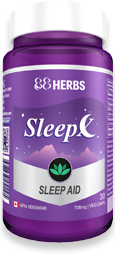
Ashwagandha is great to improve sleep, l-theanine is also great for not only improving sleep, but also REM sleep. If you really have trouble sleeping, you can try our SleepX either on its own or with our ashwagandha. Here is a video about combining our ashwagandha with SleepX for sleep. ASHWAGANDHA AND SLEEP VIDEO

We have thousands of customers from all over the world enjoying our products every day. We’ll ship your orders out right away if you are interested in trying any of these supplements listed above. We wish you all the best in your learning and studying.